The Ålesund Voice Flute
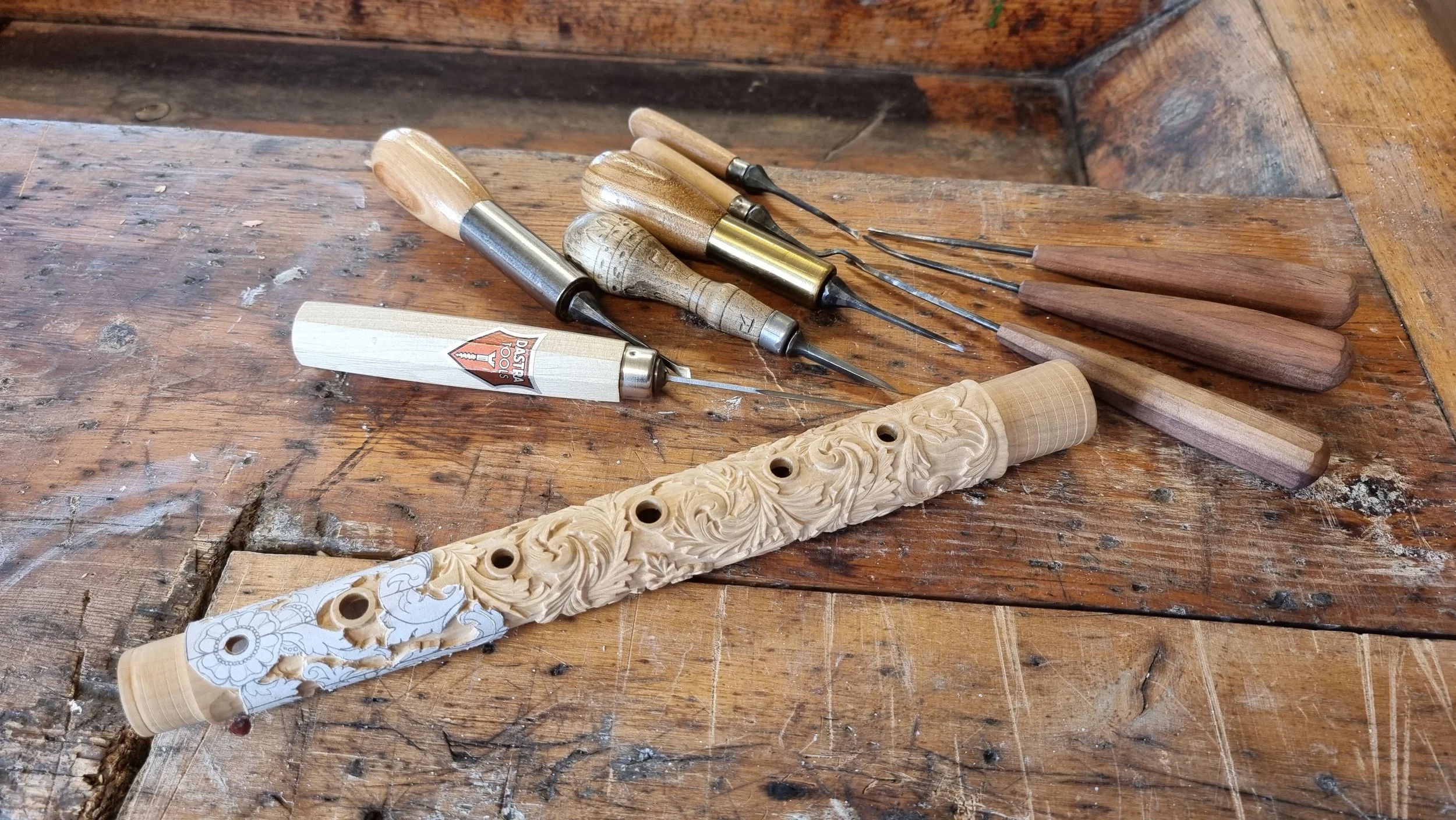
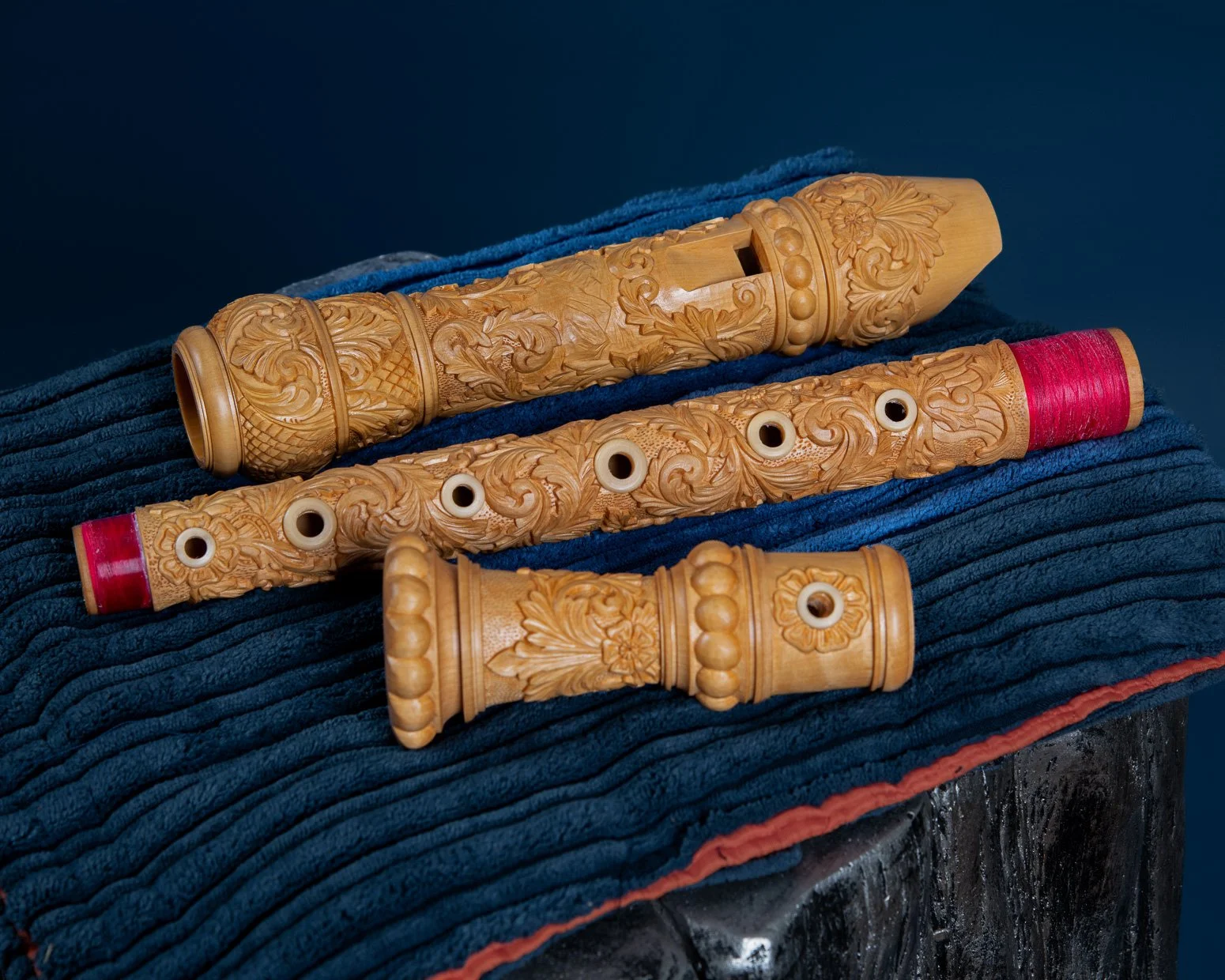
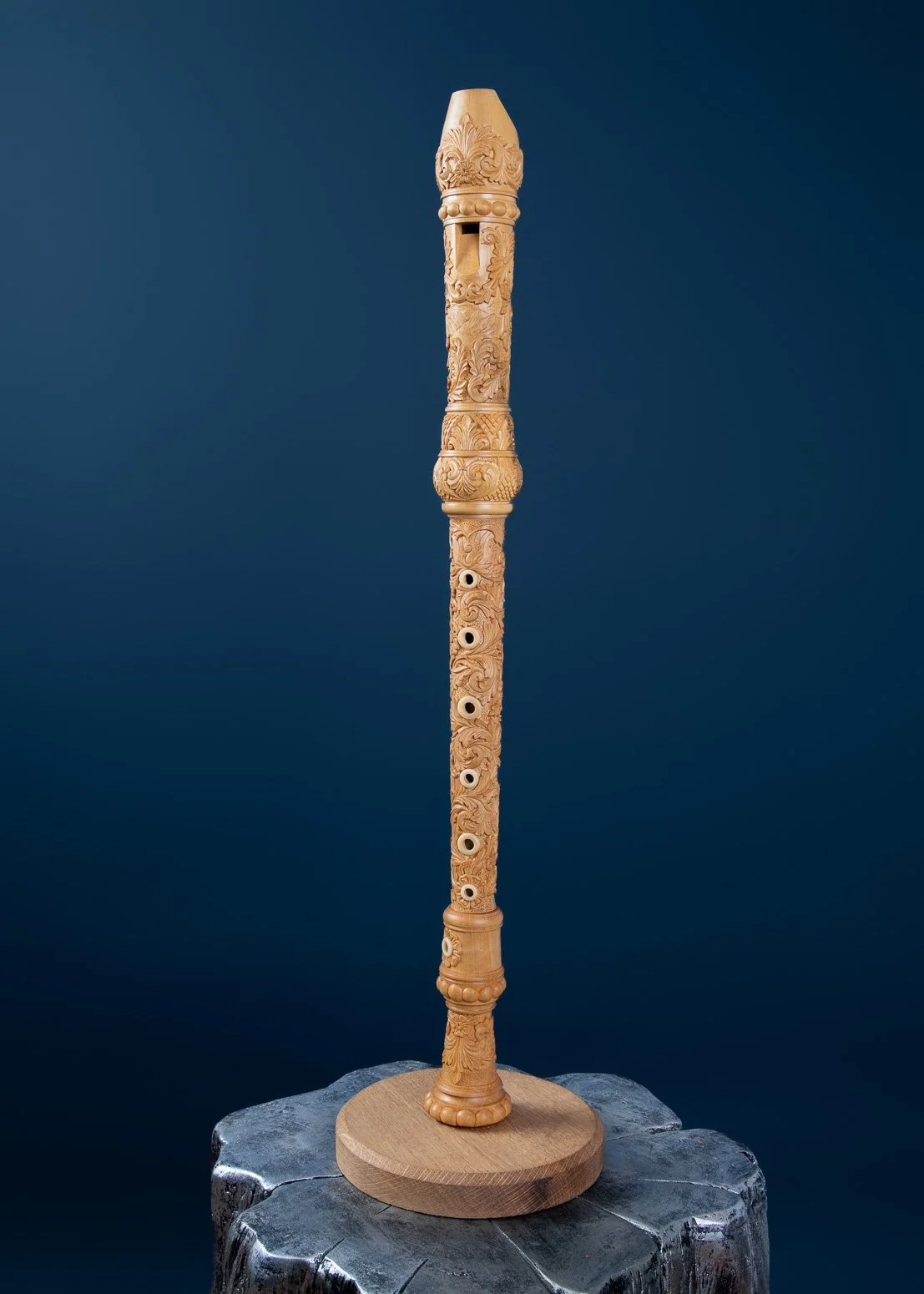
The Ålesund Voice Flute project began in early 2020 as a long-term exploration of how sculptural woodcarving might interact with the precise geometry of a musical instrument. The work was developed in collaboration with flute maker Tim Cranmore, based in the United Kingdom, a master craftsman internationally recognised for his precision and historically informed wooden flutes. The initial impulse for the project emerged from an interest in applying ornamental carving to an object defined primarily by acoustical precision. A flute presents a particular challenge for the carver: its cylindrical form offers little structural tolerance for alteration, and the placement of finger holes and bore geometry must remain exact in order to preserve tonal performance. Ornamentation therefore had to be conceived not as an applied decoration but as a carefully integrated sculptural surface that respects the instrument’s technical requirements. Over several years prior to the project, extensive sketchbook studies had accumulated exploring how ornamental systems might be adapted to cylindrical objects. These studies combined references from Scandinavian folk carving traditions, classical ornament such as the acanthus leaf, and landscape motifs inspired by the Norwegian west coast.
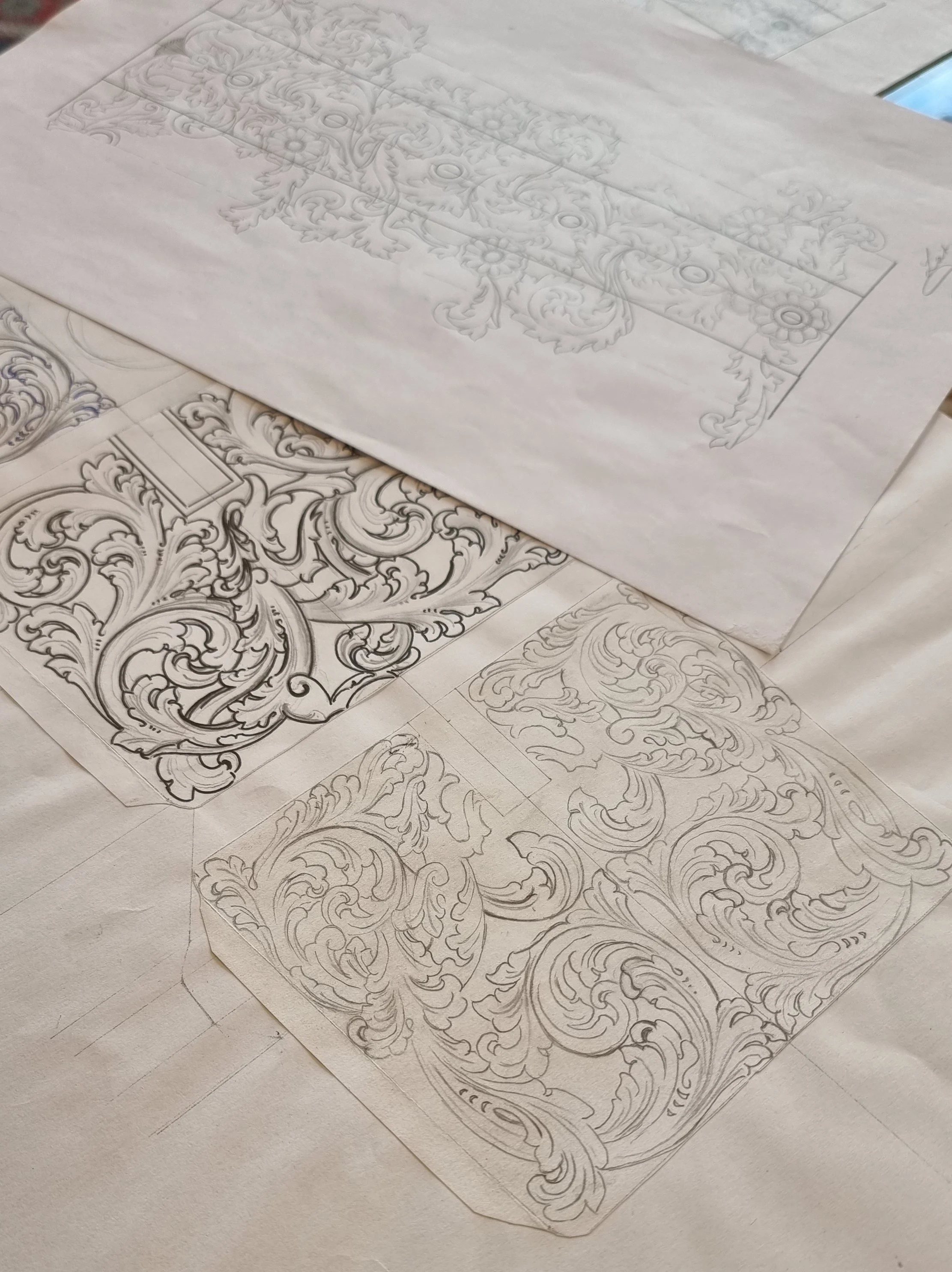
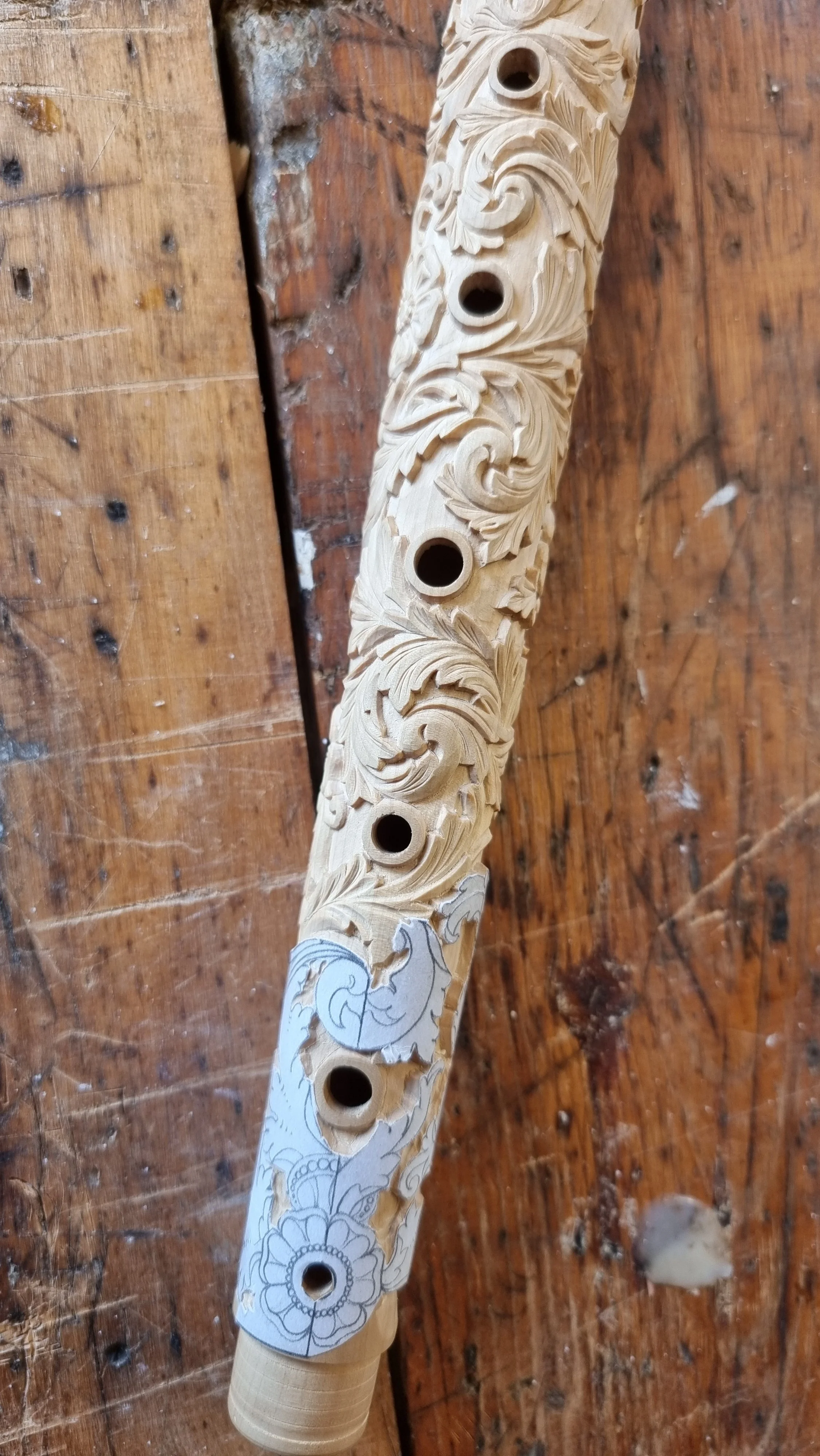
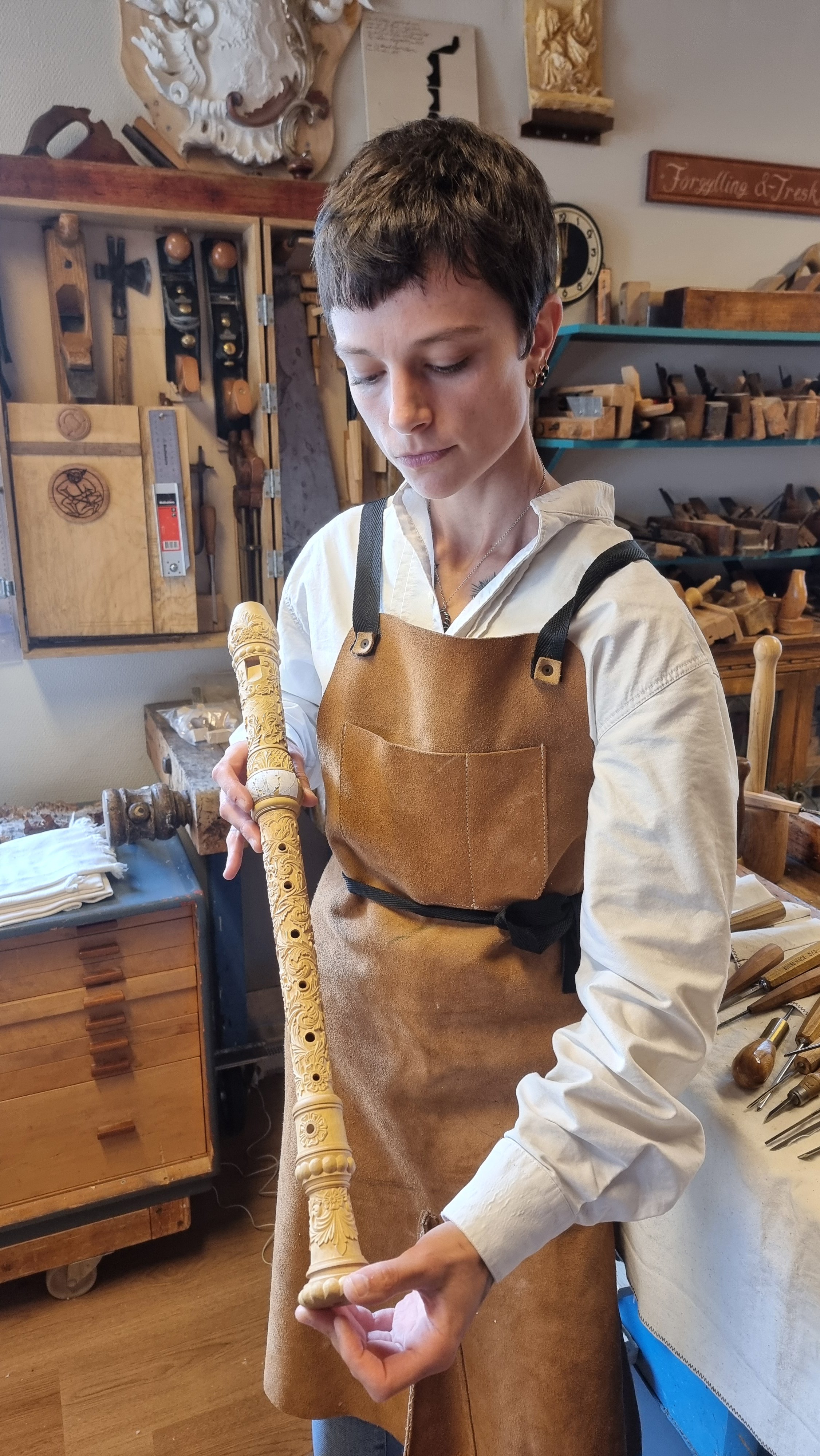
In late 2020 the proposal of a carved voice flute was presented to Tim Cranmore. By 2021 he completed the instrument itself: a handmade Voice Flute turned in boxwood. The instrument provided the physical basis upon which the carving design could be developed. The following period was largely dedicated to research, drawing, and structural planning. Each of the flute’s three sections was measured and drawn at full scale. Because ornament designed for flat surfaces behaves differently on a cylinder, the flute body was digitally unfolded into two-dimensional drawing space to allow accurate placement of motifs relative to the finger holes. The central section was also modelled digitally as a three-dimensional cylinder to test the spatial behaviour of the ornament. During this phase the development of the decorative language became a collaborative process involving several woodcarvers. My apprentice at the time, Eirik Storvik Kristiansen, played an important role in translating early sketches into refined ornamental drawings. The design drew inspiration from the acanthus carving traditions of Gudbrandsdal, particularly the work of master carver Ole O. Moene, while also incorporating classical compositional devices.
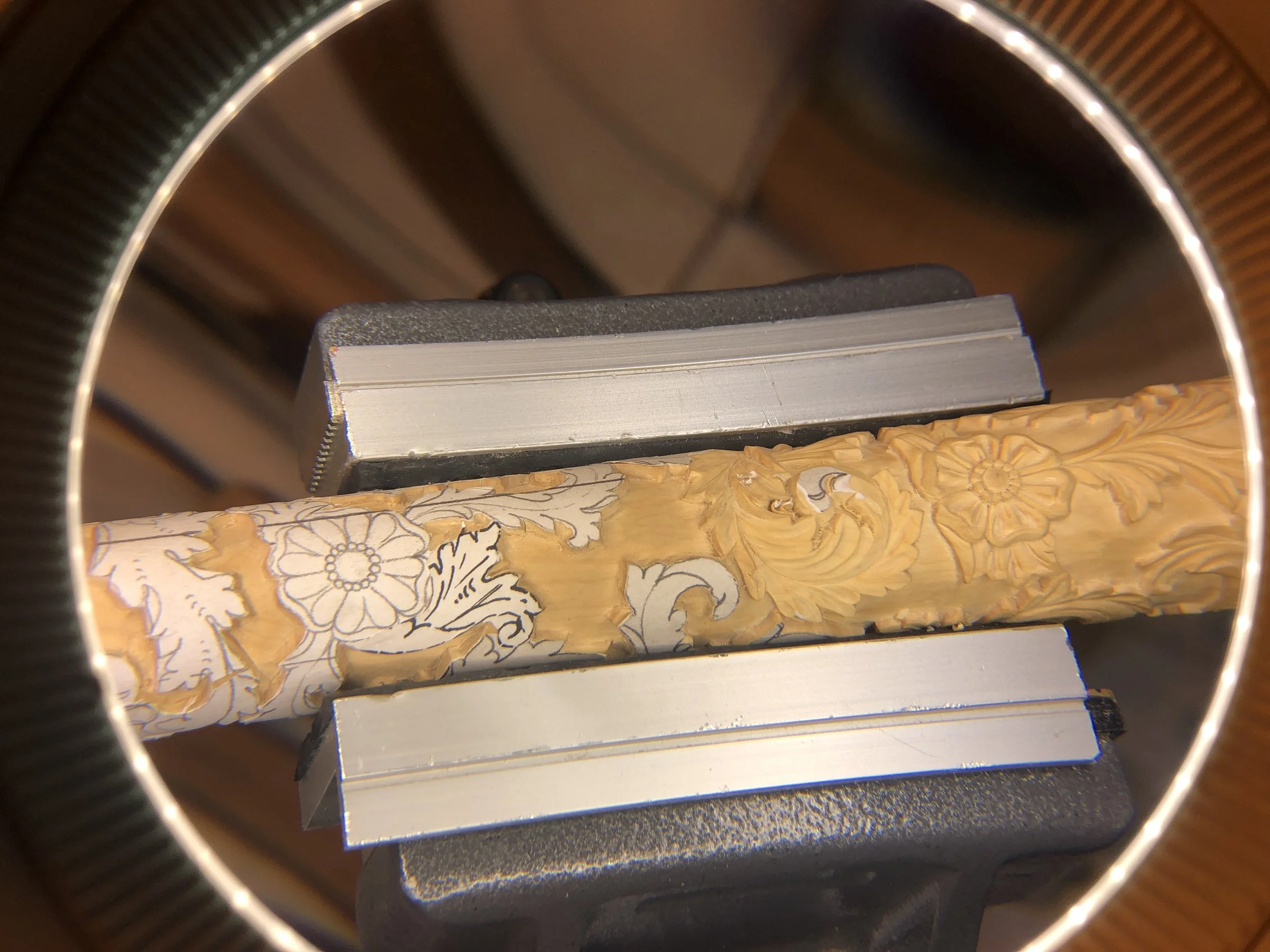
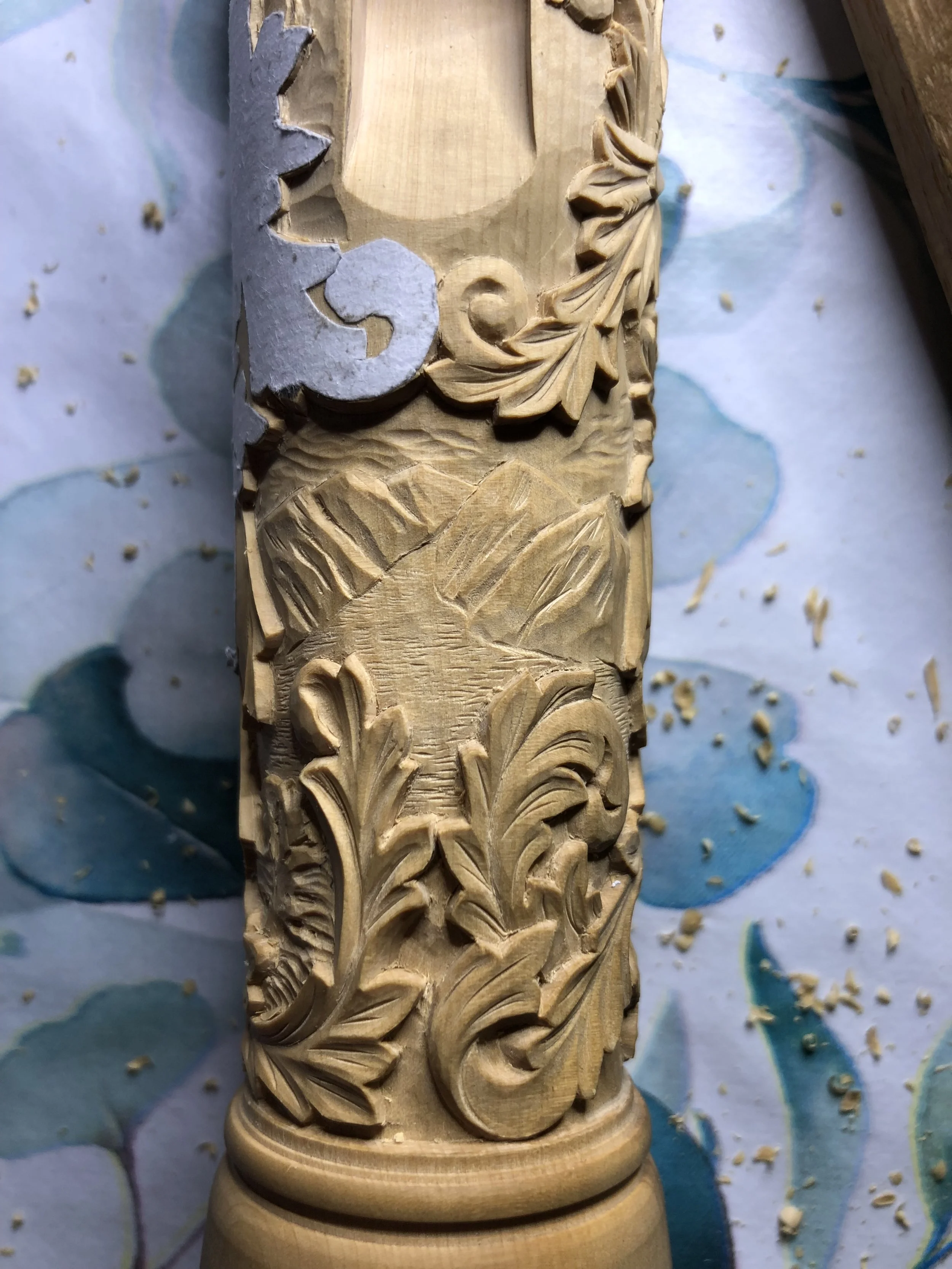
The ornament was structured as an asymmetrical acanthus composition that spirals upward along the instrument. Between the scroll forms, floral elements were placed to create visual rhythm around the finger holes. The head joint of the flute incorporates a small landscape reference derived from the coastal surroundings of Ålesund in western Norway. Underlying the composition is a proportional logic inspired by the Fibonacci sequence. The gradual expansion of the acanthus forms follows a spiral rhythm reminiscent of natural growth patterns, an idea that has long been associated with both musical composition and visual harmony. This proportional system offered a framework for distributing ornament along the flute while maintaining balance across its cylindrical surface. Before carving began, a full digital model of the instrument was produced in order to visualise the ornament in three dimensions. The model allowed potential clients and collaborators to understand the final object and served as an important tool in evaluating the relationship between carving depth and the structural limitations of the instrument. The carving phase ultimately became a solitary process after the completion of Eirik Storvik Kristiansen’s apprenticeship period. What had initially been conceived as a collective undertaking therefore shifted into a more individual working phase in which the drawings were gradually translated into sculptural form.
The Ålesund Voice Flute project represents an extended investigation into the intersection of musical instrument making and sculptural woodcarving. It also highlights the potential role of digital modelling in supporting traditional craft processes, particularly when working with complex geometries such as cylindrical instruments.
The collaboration between flute maker and woodcarver continues to explore how ornamental carving can coexist with the strict technical requirements of historically informed instrument construction.