
Conversations Across the Workbench
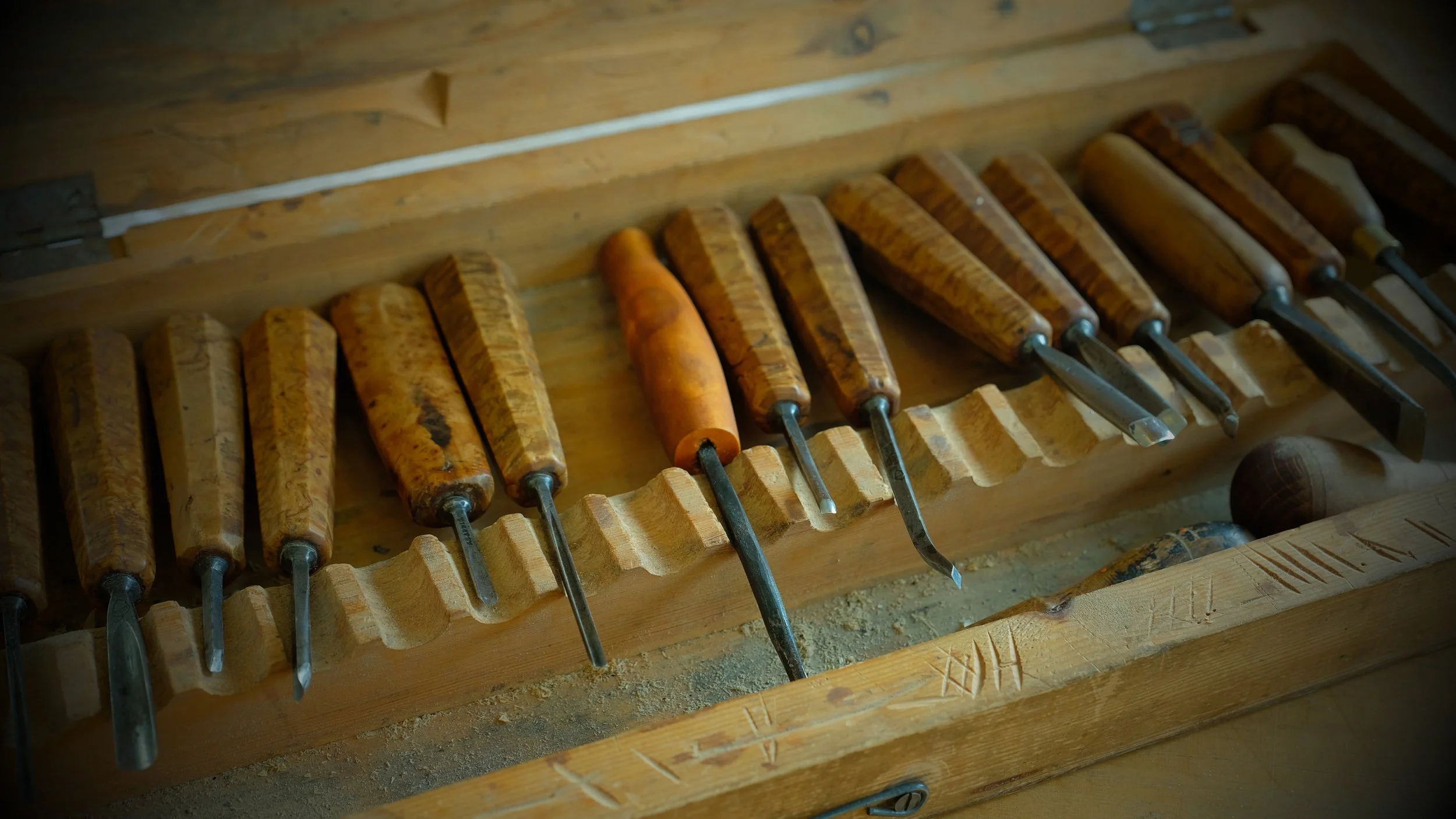
The history of regional woodcarving traditions in Norway is often preserved not through formal documentation, but through tools, objects, and the continuity of practice across generations. Figures such as Jon Olsson Rustom (b. 1863, Rustom, Vågå) and later Johannes O. Myrum (b. 1896, Vågå) exemplify this mode of transmission, in which knowledge is embedded less in written records than in the disciplined repetition of making.
Jon Olsson Rustom’s life traces a familiar trajectory of the late nineteenth and early twentieth centuries. At the age of twenty-two, he emigrated to America, before returning to Norway around 1914 to care for his parents. His practice as a woodcarver developed within a broader familial network of skilled makers, including silversmiths, carpenters, and woodcarvers. His production ranged from small-scale domestic objects—picture frames, mirror frames, and butter molds—to more structurally integrated items such as carved wooden porridge bowls (grautembere), towel racks, and furniture. These works occupied a space between utility and ornament, reflecting both local demand and inherited formal vocabularies. Initially reliant on objects made by Sjugurd Grevusten, Rustom gradually internalized the necessary techniques, producing such forms independently and adapting them to context and need.
This model of practice—iterative, responsive, and materially grounded—extends into the work of Johannes O. Myrum, who inherited Rustom’s carving tools and employed them throughout his own career. Trained under his grandfather, Hans Myrum, Johannes combined smallholding with carving, the latter serving both as an economic supplement and as a site of artistic development. His work reflects an awareness of earlier masters, including Jakob Klukstad, Jakob Sæterdalen, Syver Jotun, and Anders Tasmyrhaugen, yet does not operate through direct imitation. Rather, it situates itself within an evolving dialogue, in which form, technique, and proportion are continuously recalibrated. His output included both small and large-scale objects, as well as a significant number of grave markers in wood and soapstone, where carving intersects with commemorative function.
It is within this context of material continuity that my own practice has developed in recent years. Since relocating to Norway, I have become increasingly attentive to these localized traditions—often maintained within smaller communities and transmitted through familial or informal structures. Their relevance lies not only in their historical significance, but in their ongoing presence as living practices. To engage with them is not merely to reference a past, but to enter into a field of relations that continues to shape how objects are made.
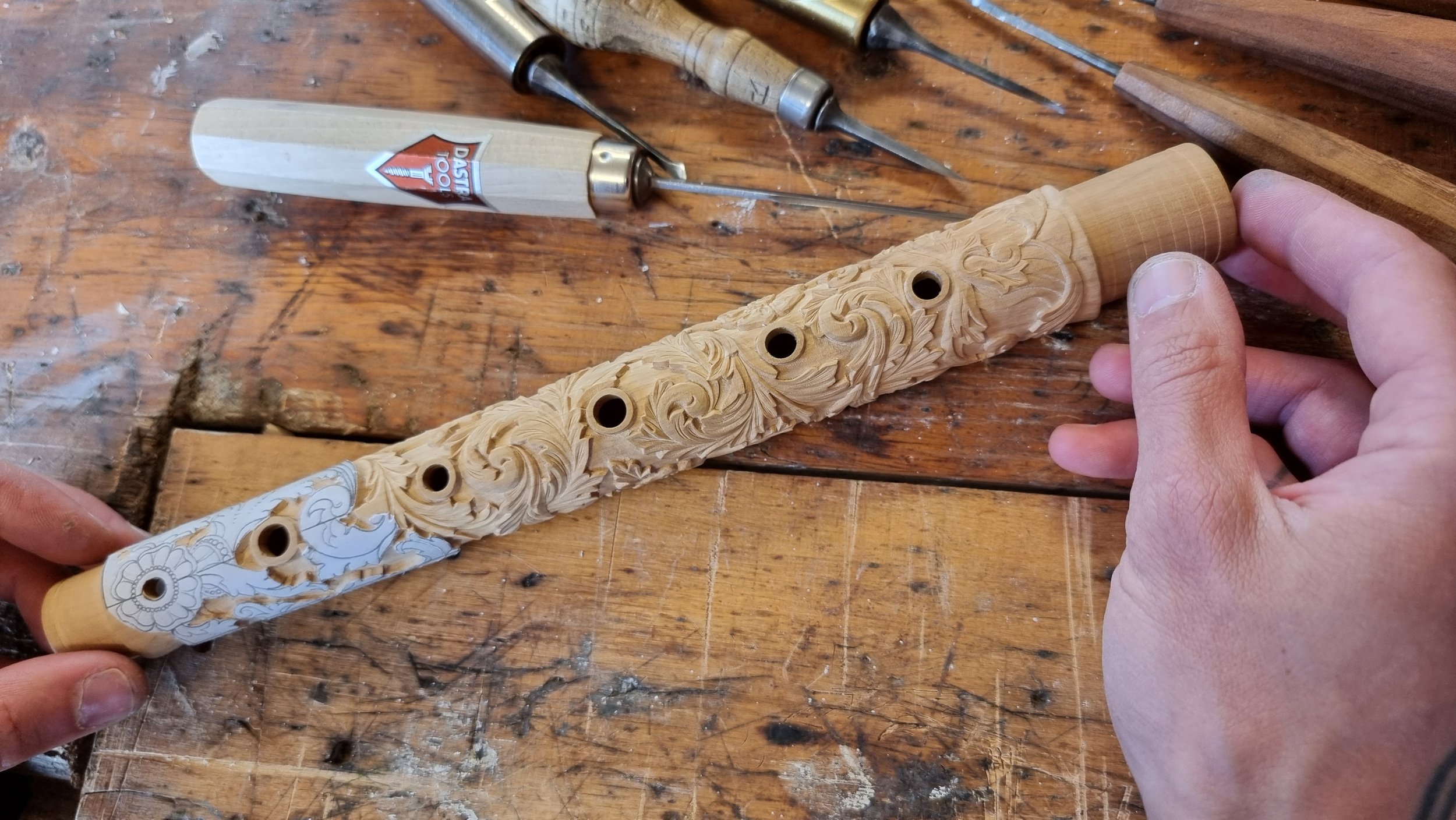
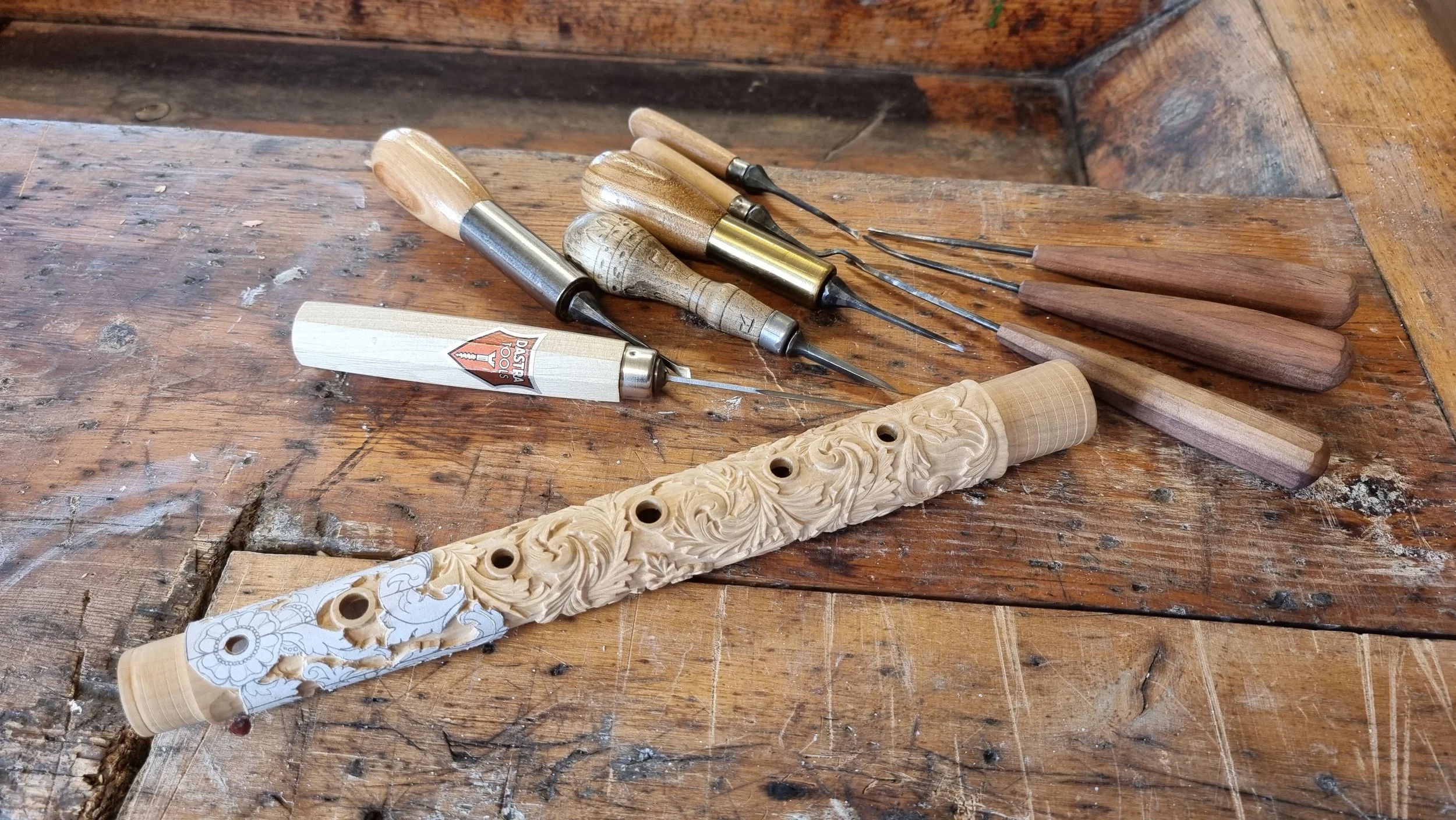
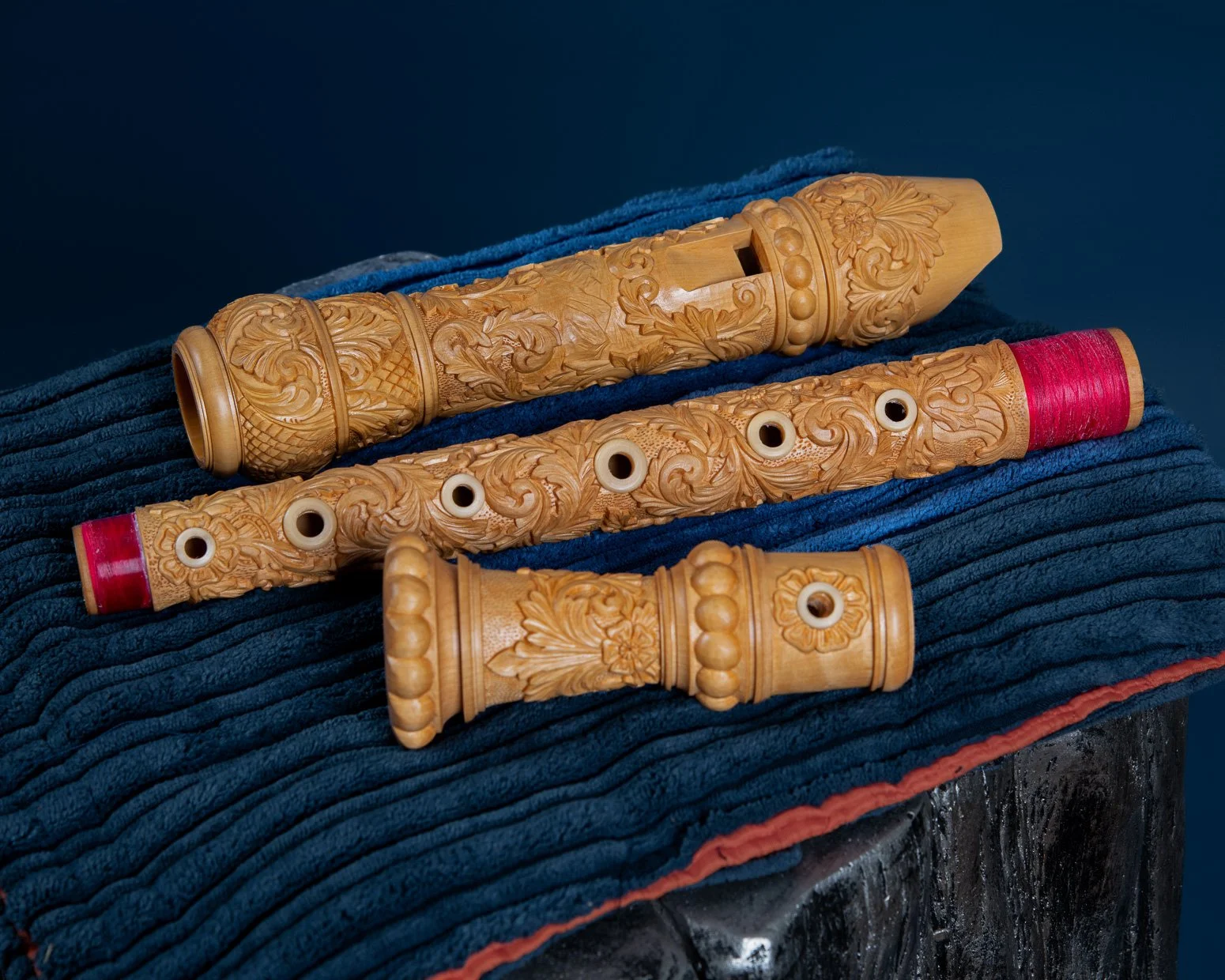
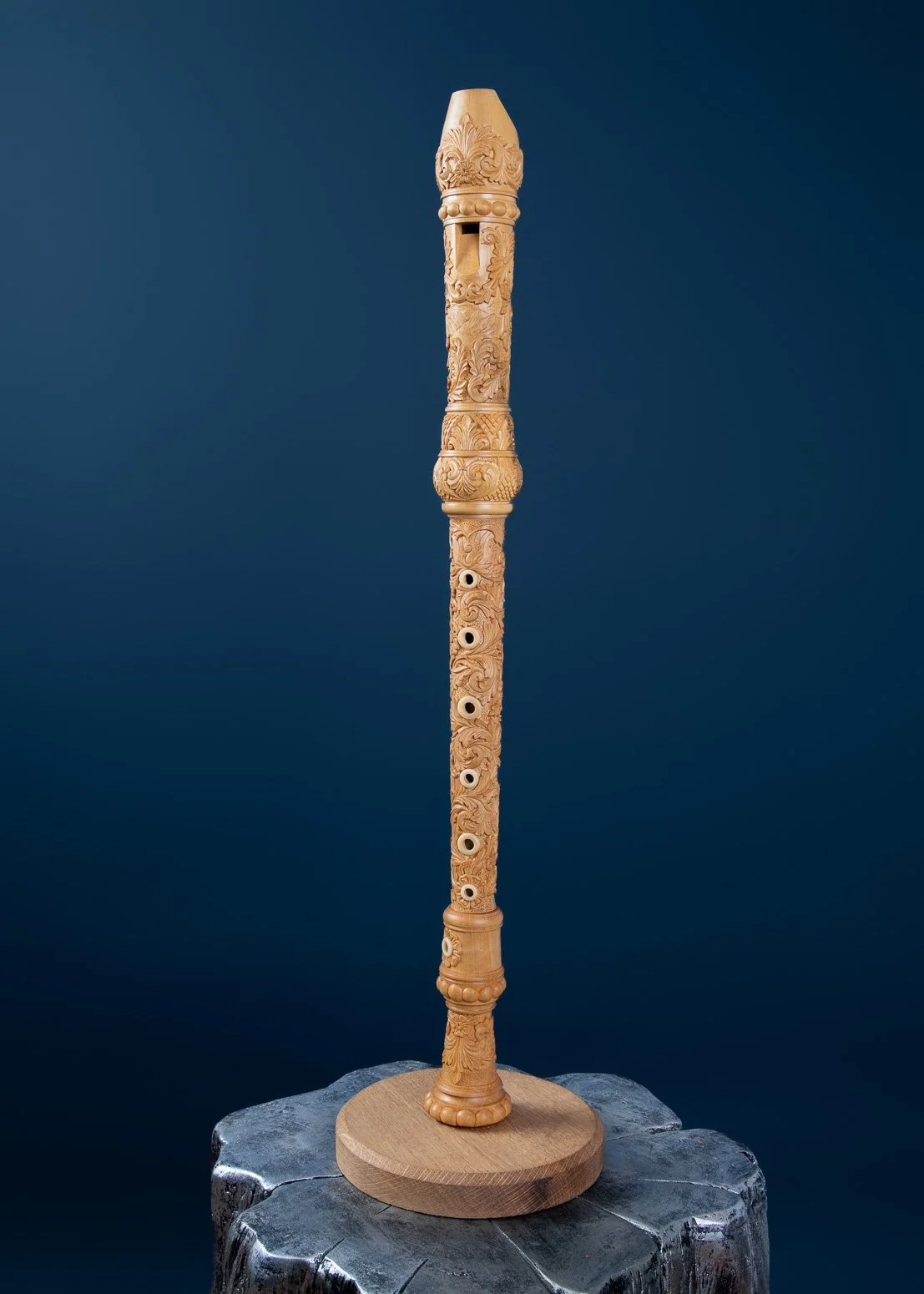
This influence is not confined to a single work, but extends across different projects within my practice. In the carving of the Ålesund voice flute—documented separately through both visual and written material—the sensibility encountered in Johannes O. Myrum’s work informed aspects of the ornamental approach. This did not take the form of direct replication of motifs, but rather manifested in the handling of depth, rhythm, and the relationship between structural form and surface articulation. The encounter with his tools and the study of his objects thus operate not as isolated references, but as an ongoing point of orientation within my work.
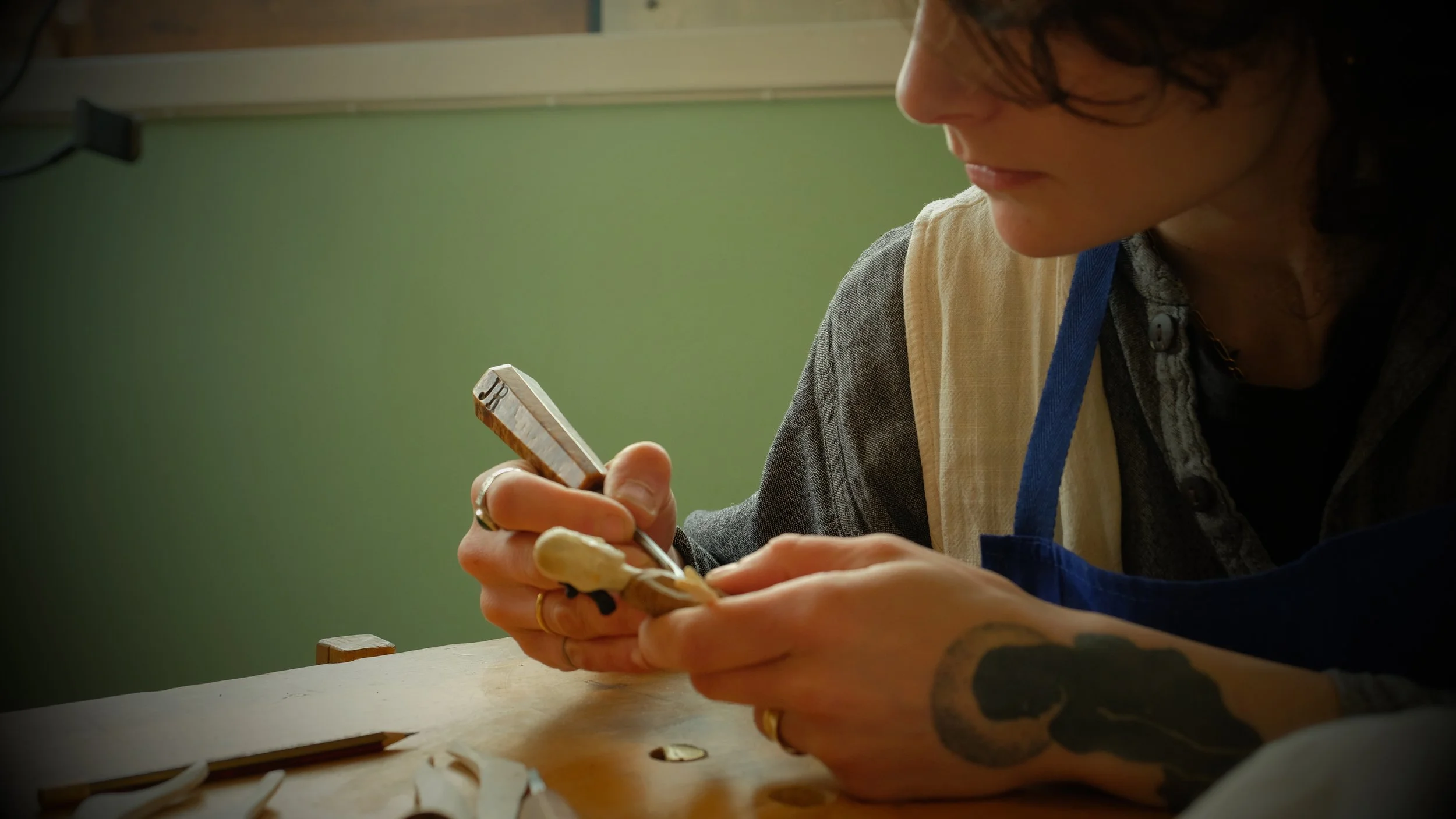
Concurrently, my practice has moved toward increasing degrees of refinement and reduction, particularly in the direction of miniature carving. This shift is not solely aesthetic, but also methodological: the smaller the scale, the more pronounced the negotiation between tool, material, and gesture becomes. At this level, each incision carries structural consequences, and the material’s resistance is no longer background, but an active determinant of form.
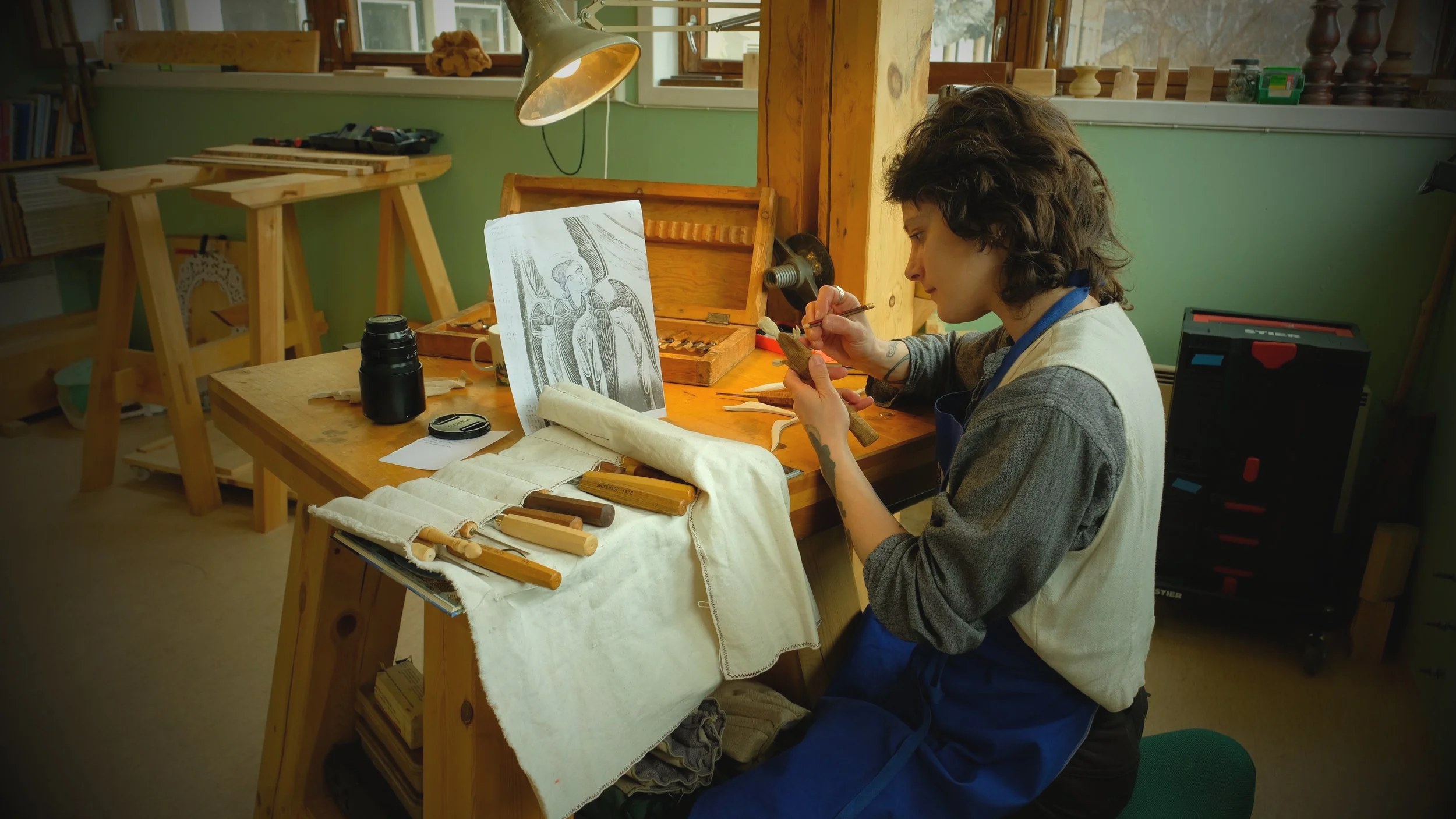
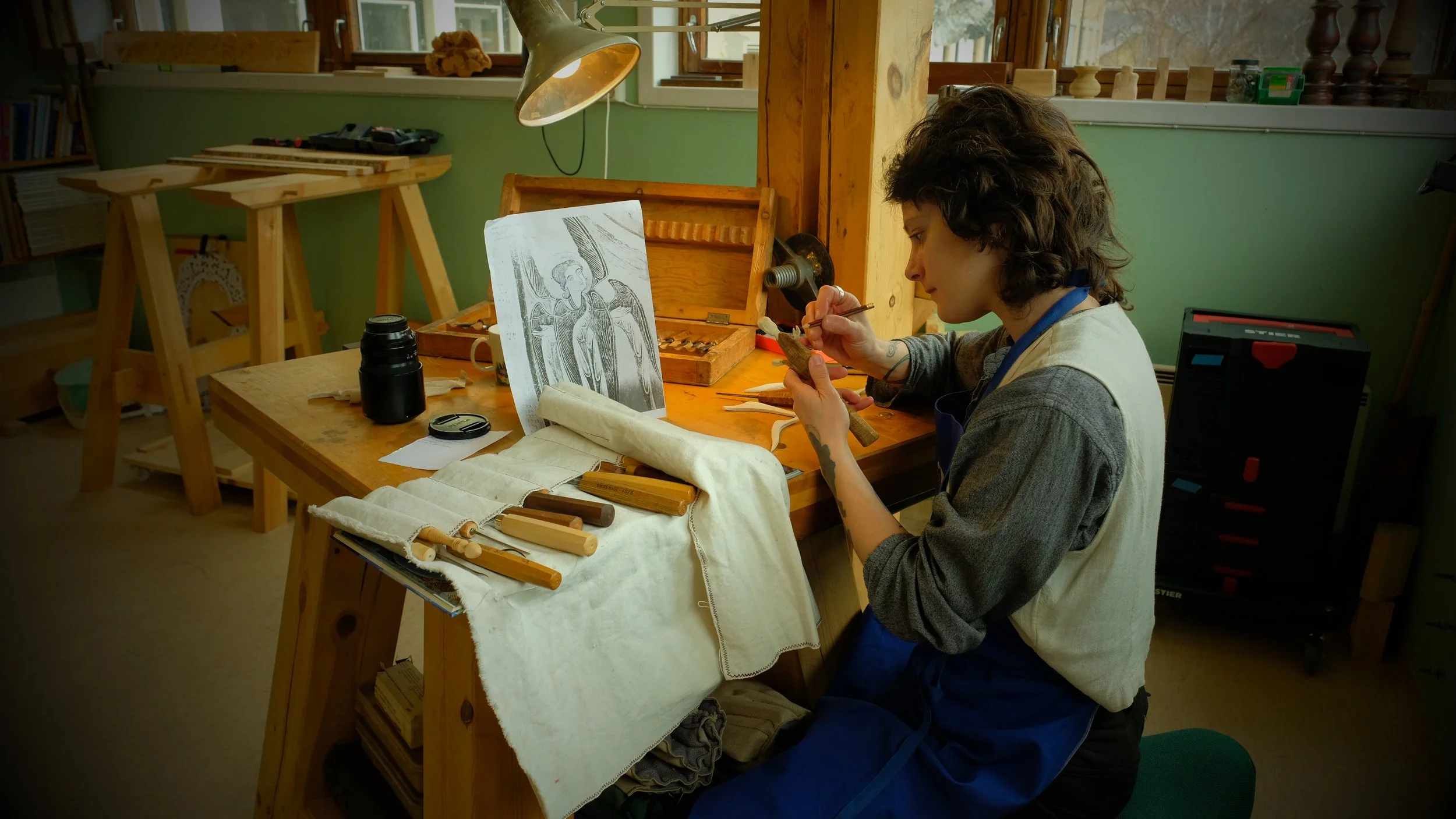
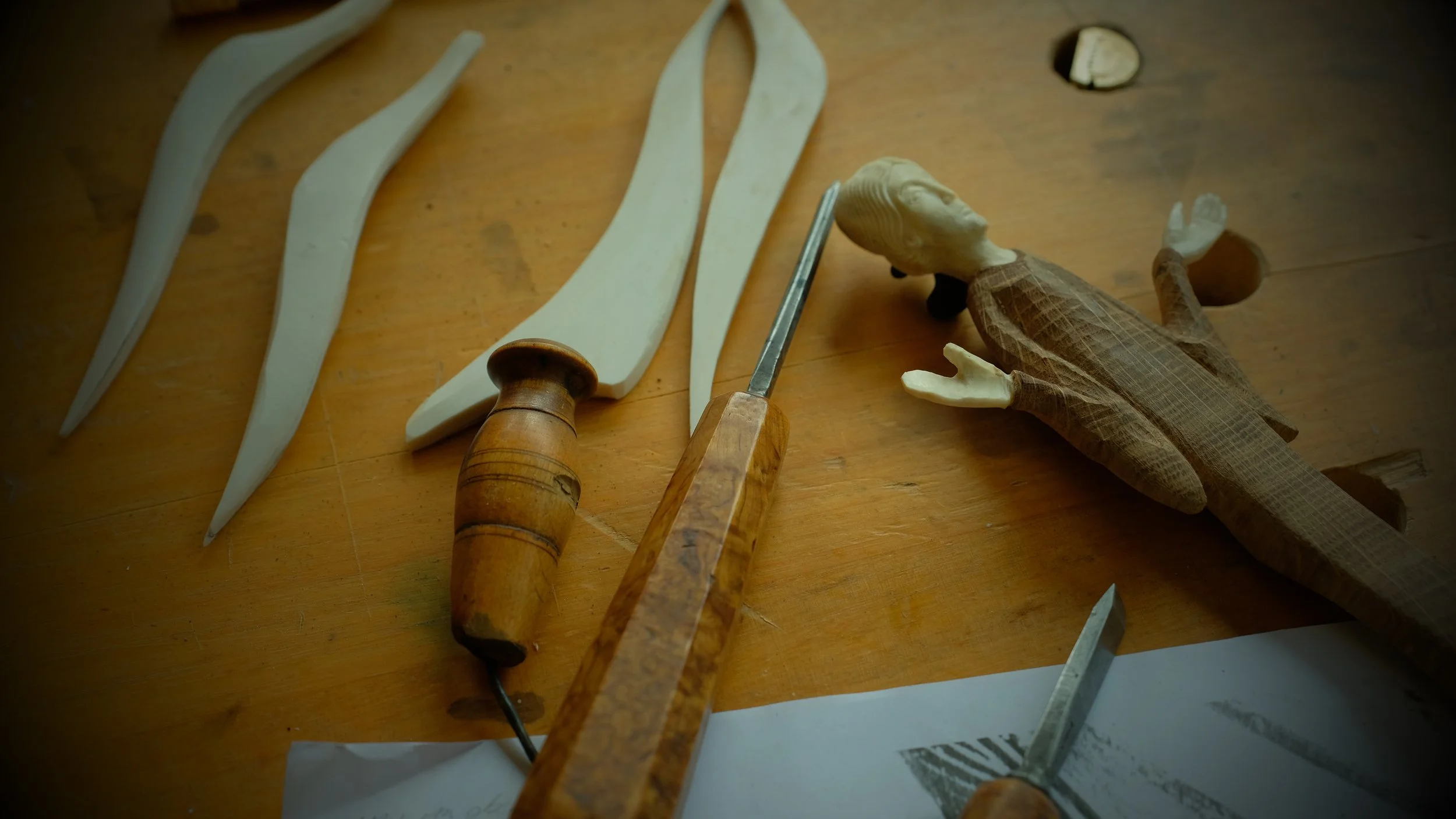
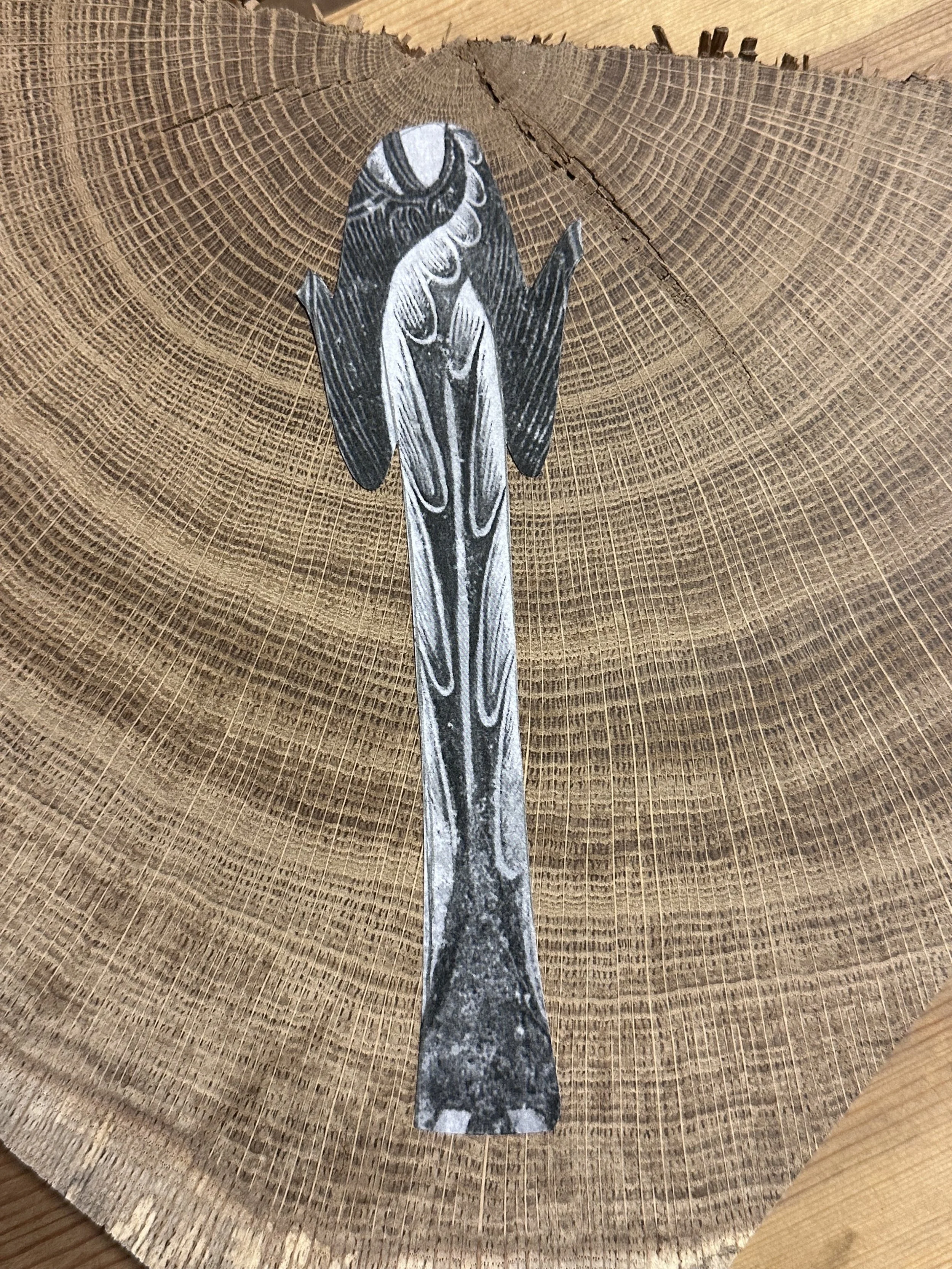
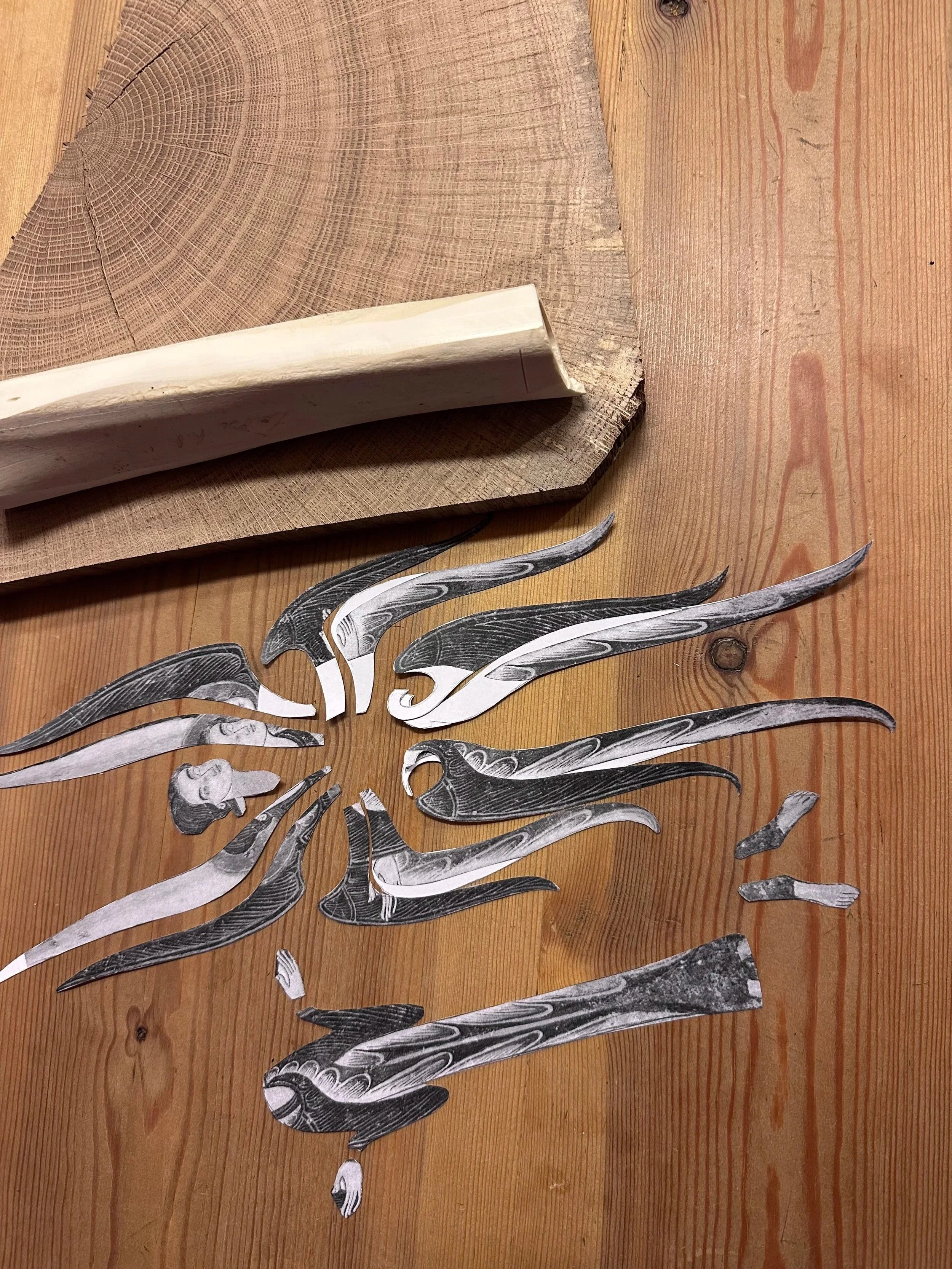
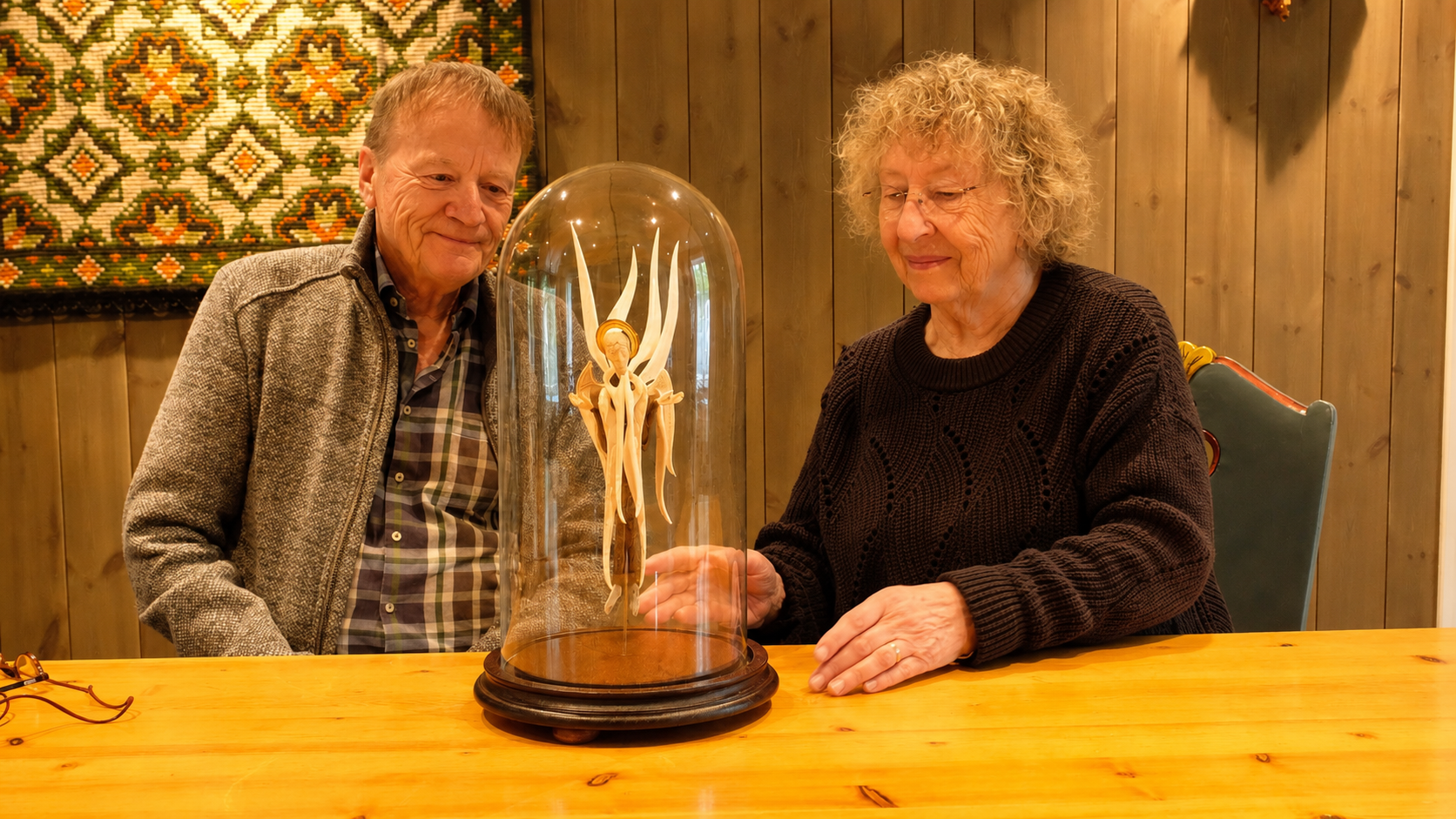
A recent work, a miniature carving of a seraphim, developed within this intersection of historical awareness and material inquiry. The figure is executed in oak, worked in the end grain—a choice that allows for heightened density and precision, while simultaneously demanding a more controlled and deliberate approach to cutting. The composition incorporates multiple materials: African blackwood for a concentrated detail; deer horn for the hands, feet, and face; elk bone for the wings; and brass for the areola and the iris of the eyes. Each material introduces distinct mechanical properties—variations in hardness, grain structure, and elasticity—which in turn influence both the sequence and the manner of execution. The process is therefore not governed by a fixed design, but unfolds through continuous adjustment to these constraints.
The iconographic basis of the figure derives from a 12th-century fresco located in the crypt of the monastery of Kloster Marienberg in South Tyrol, Italy. This reference establishes a further layer of continuity, linking the work not only to Norwegian carving traditions, but also to a broader European visual and devotional context. The resulting object, produced as a private commission and now located in Germany, thus operates across multiple geographies, situating itself between origin, influence, and destination.
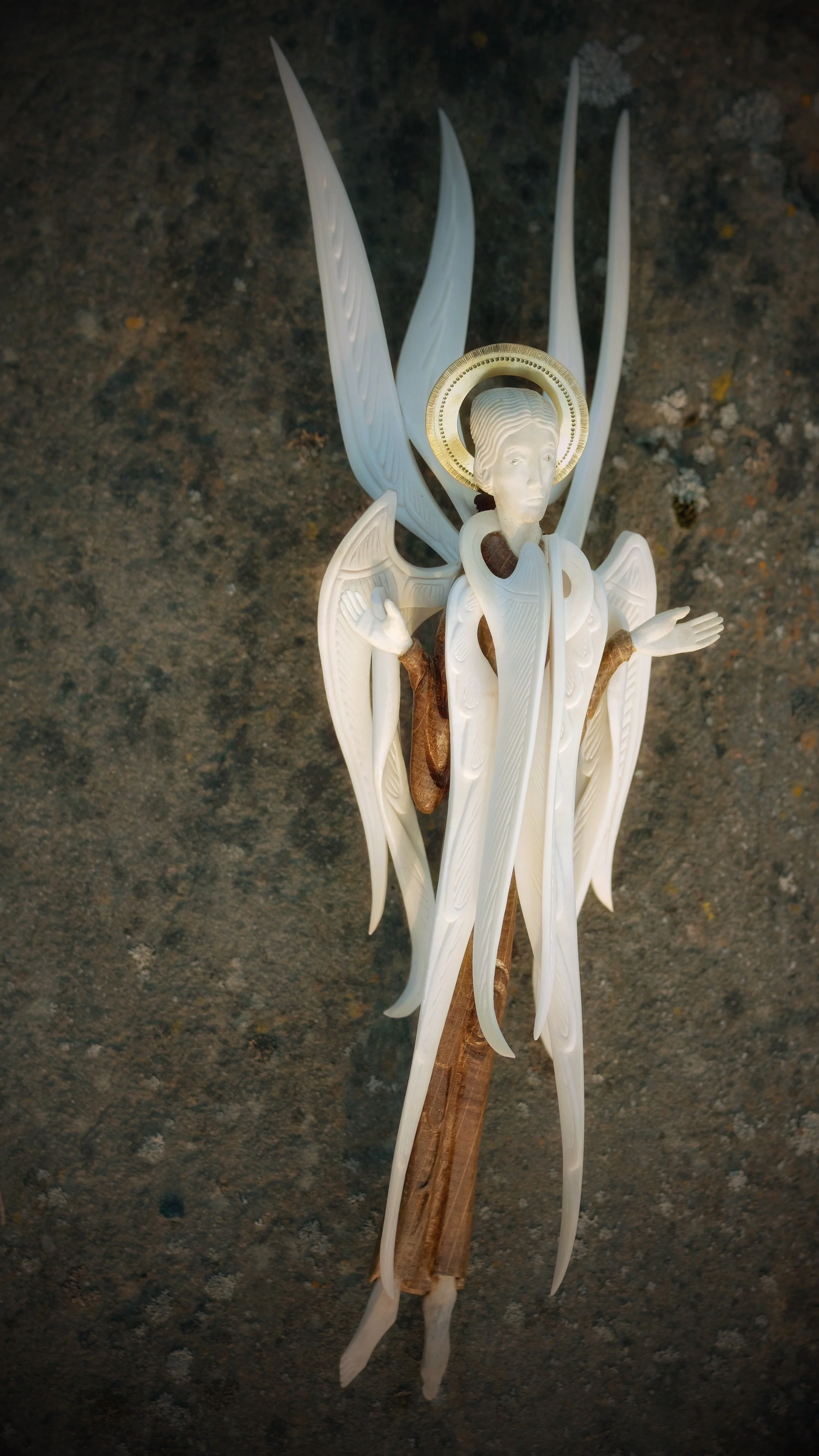
A critical dimension of this work lies in the tools employed during its making. The carving was executed, in part, using the original tools of Johannes O. Myrum. Their condition—still sharp, balanced, and fully functional—attests to a sustained practice maintained with care and precision over decades. The use of these tools does not constitute a form of historical reconstruction, but rather an extension of their operative life. Their edges retain not only technical adequacy, but also the accumulated decisions of prior use, embedded in subtle variations of geometry and wear.
In this sense, the act of carving becomes a point of convergence between temporal layers. The work on the seraphim is not only shaped by contemporary intention, but also informed by the residual presence of earlier practices. This does not manifest as stylistic continuity, but as a shared orientation toward material: an attentiveness sustained over time, in which making is neither purely instrumental nor purely expressive, but situated in a continuous negotiation between both.
Such practices resist clear separation between past and present. Instead, they suggest a mode of working in which historical knowledge is neither abstracted nor replicated, but activated through use. The tools, the materials, and the gestures form a network of relations that extends beyond individual authorship.
It is within this framework that I locate my own work: not as an isolated production, but as a situated act within an ongoing tradition, where continuity is maintained not through preservation alone, but through the repeated, attentive act of making.
The Ålesund Voice Flute
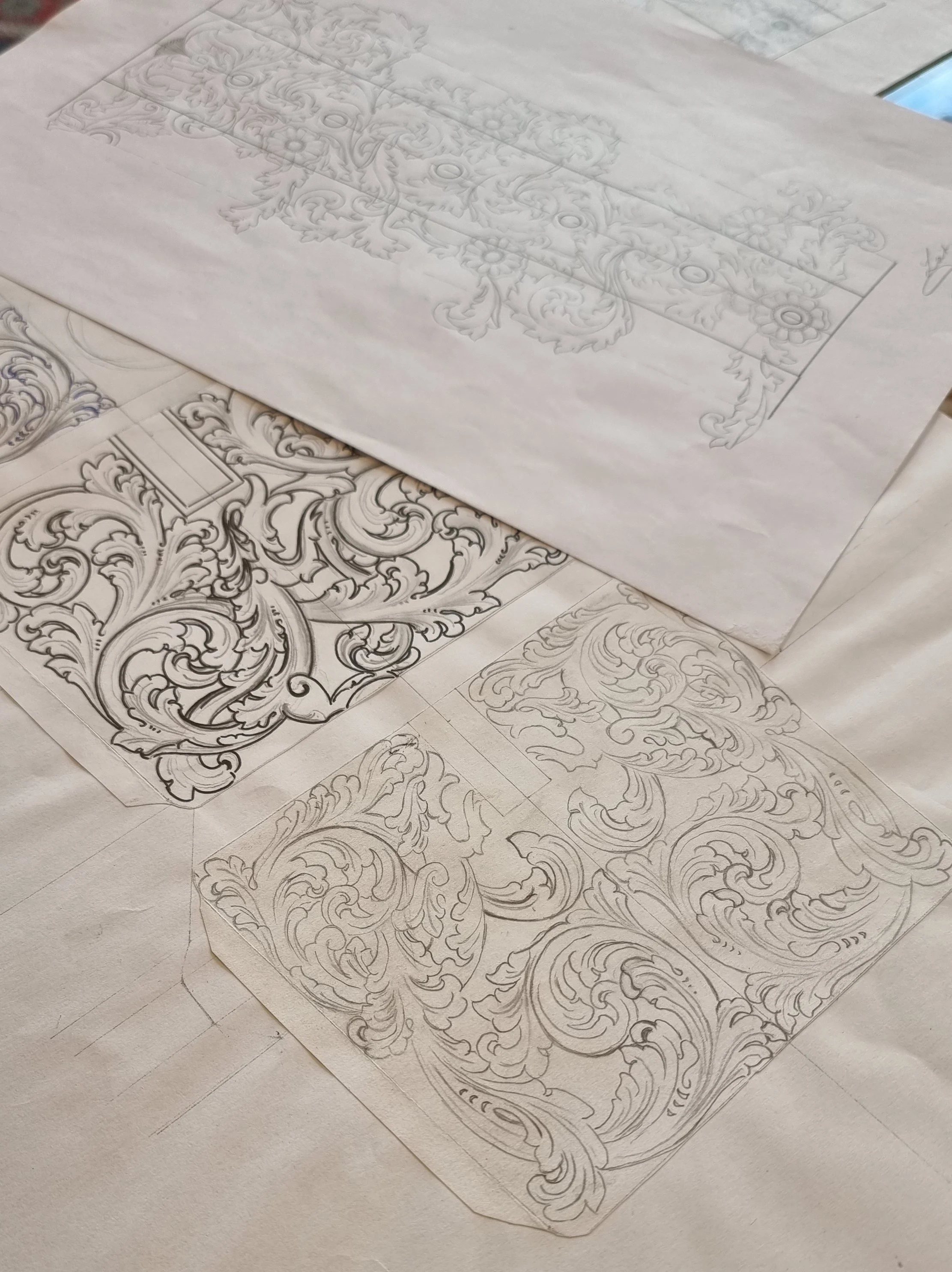
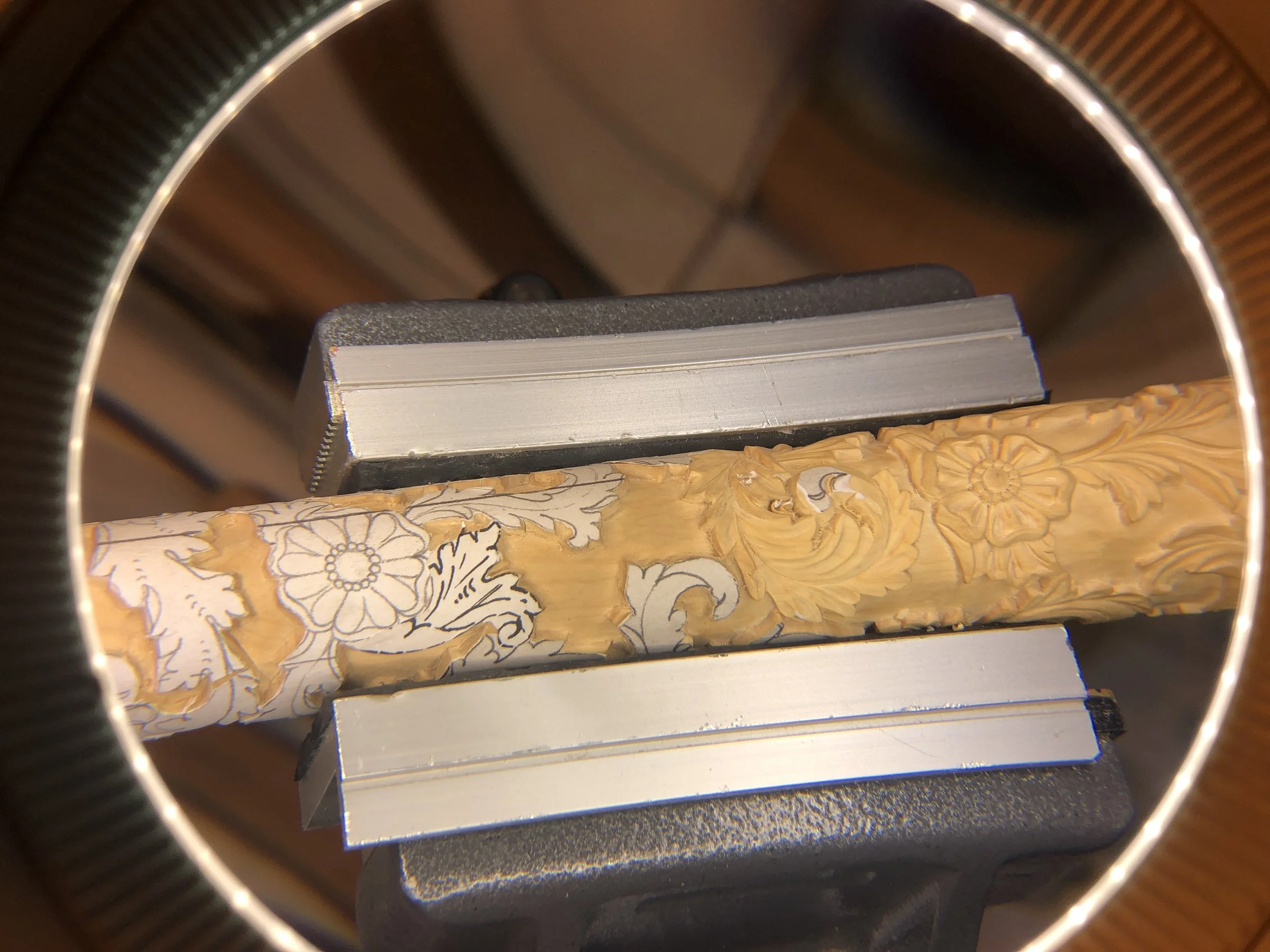
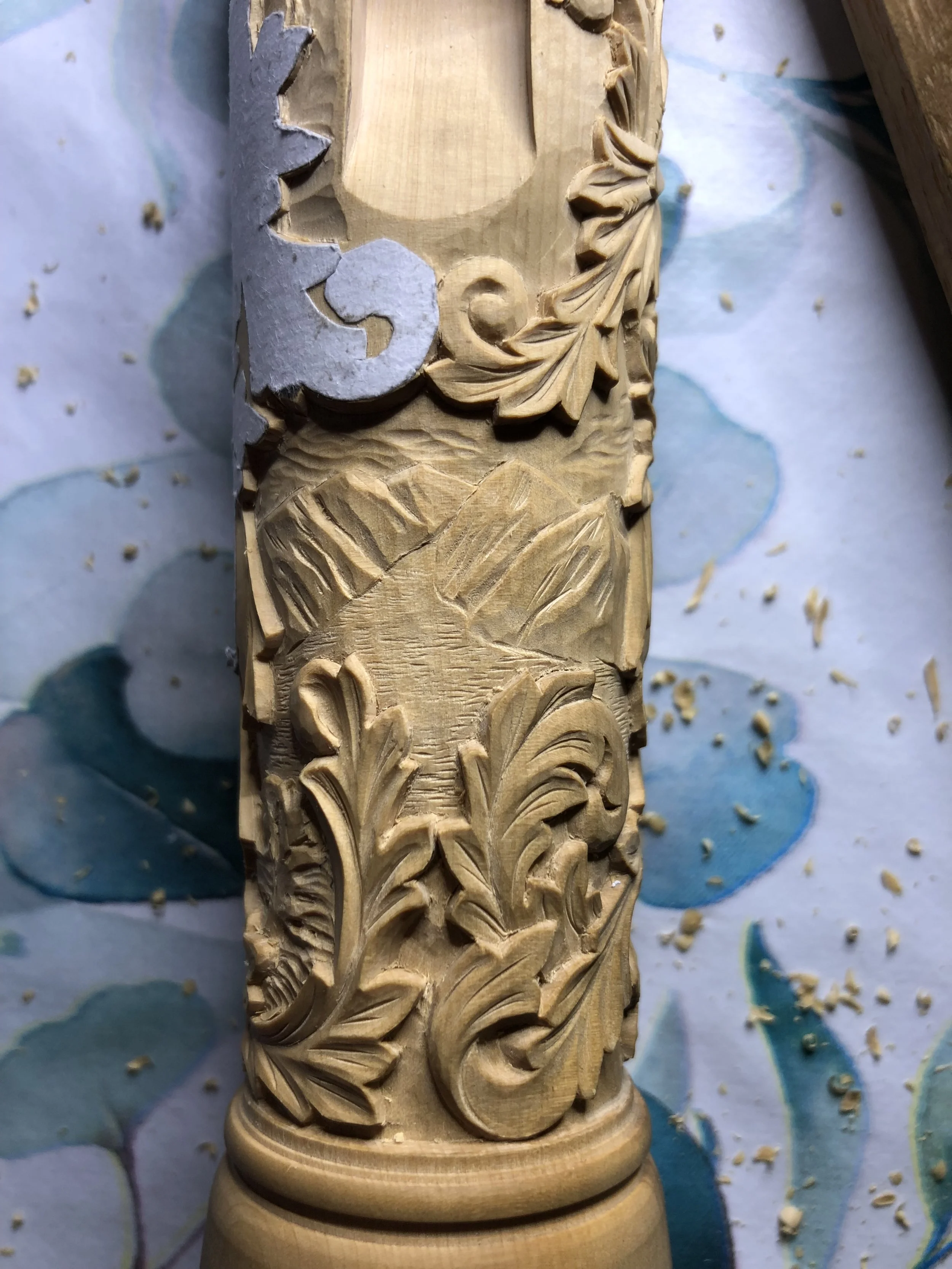
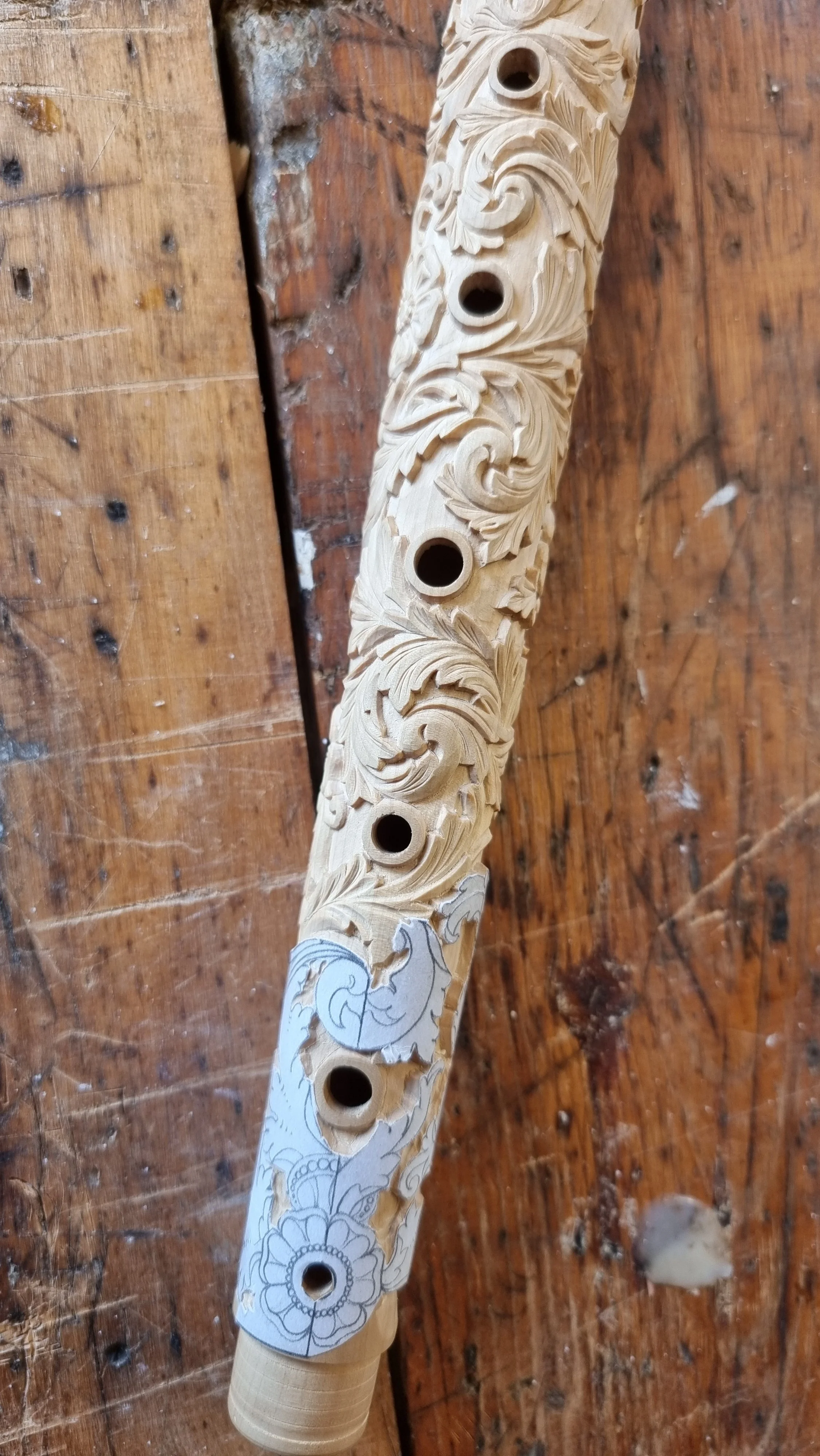
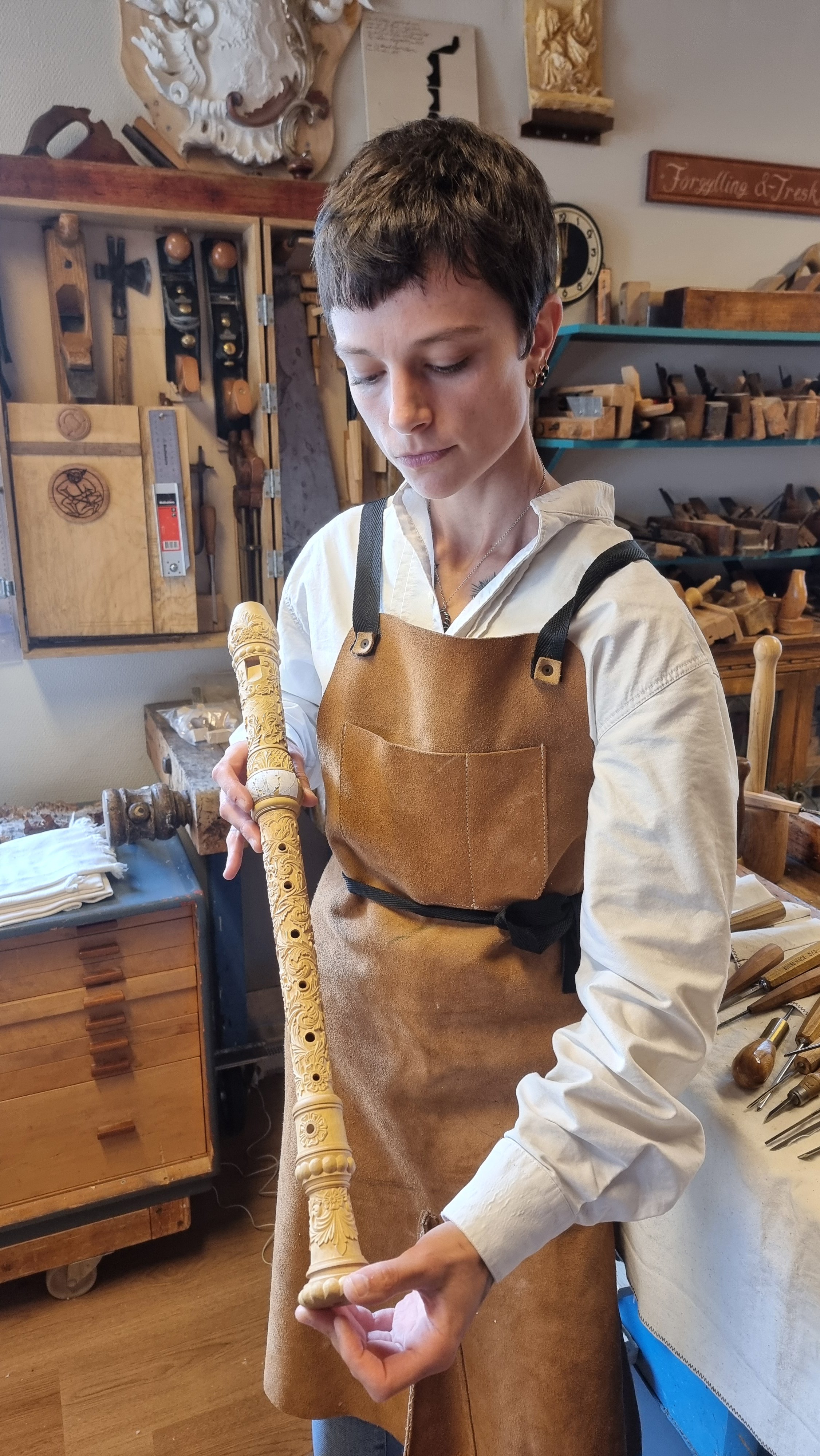
The Ålesund Voice Flute project began in early 2020 as a long-term exploration of how sculptural woodcarving might interact with the precise geometry of a musical instrument. The work was developed in collaboration with flute maker Tim Cranmore, based in the United Kingdom, a master craftsman internationally recognised for his precision and historically informed wooden flutes. The initial impulse for the project emerged from an interest in applying ornamental carving to an object defined primarily by acoustical precision. A flute presents a particular challenge for the carver: its cylindrical form offers little structural tolerance for alteration, and the placement of finger holes and bore geometry must remain exact in order to preserve tonal performance. Ornamentation therefore had to be conceived not as an applied decoration but as a carefully integrated sculptural surface that respects the instrument’s technical requirements. Over several years prior to the project, extensive sketchbook studies had accumulated exploring how ornamental systems might be adapted to cylindrical objects. These studies combined references from Scandinavian folk carving traditions, classical ornament such as the acanthus leaf, and landscape motifs inspired by the Norwegian west coast.
In late 2020 the proposal of a carved voice flute was presented to Tim Cranmore. By 2021 he completed the instrument itself: a handmade Voice Flute turned in boxwood. The instrument provided the physical basis upon which the carving design could be developed. The following period was largely dedicated to research, drawing, and structural planning. Each of the flute’s three sections was measured and drawn at full scale. Because ornament designed for flat surfaces behaves differently on a cylinder, the flute body was digitally unfolded into two-dimensional drawing space to allow accurate placement of motifs relative to the finger holes. The central section was also modelled digitally as a three-dimensional cylinder to test the spatial behaviour of the ornament. During this phase the development of the decorative language became a collaborative process involving several woodcarvers. My apprentice at the time, Eirik Storvik Kristiansen, played an important role in translating early sketches into refined ornamental drawings. The design drew inspiration from the acanthus carving traditions of Gudbrandsdal, particularly the work of master carver Ole O. Moene, while also incorporating classical compositional devices.
The ornament was structured as an asymmetrical acanthus composition that spirals upward along the instrument. Between the scroll forms, floral elements were placed to create visual rhythm around the finger holes. The head joint of the flute incorporates a small landscape reference derived from the coastal surroundings of Ålesund in western Norway. Underlying the composition is a proportional logic inspired by the Fibonacci sequence. The gradual expansion of the acanthus forms follows a spiral rhythm reminiscent of natural growth patterns, an idea that has long been associated with both musical composition and visual harmony. This proportional system offered a framework for distributing ornament along the flute while maintaining balance across its cylindrical surface. Before carving began, a full digital model of the instrument was produced in order to visualise the ornament in three dimensions. The model allowed potential clients and collaborators to understand the final object and served as an important tool in evaluating the relationship between carving depth and the structural limitations of the instrument. The carving phase ultimately became a solitary process after the completion of Eirik Storvik Kristiansen’s apprenticeship period. What had initially been conceived as a collective undertaking therefore shifted into a more individual working phase in which the drawings were gradually translated into sculptural form.
The Ålesund Voice Flute project represents an extended investigation into the intersection of musical instrument making and sculptural woodcarving. It also highlights the potential role of digital modelling in supporting traditional craft processes, particularly when working with complex geometries such as cylindrical instruments.
The collaboration between flute maker and woodcarver continues to explore how ornamental carving can coexist with the strict technical requirements of historically informed instrument construction.

Collaboration with Campus Galli in Messkirch, Germany
Collaboration with Campus Galli
In August 2024, I organized my second collaboration and exchange project with Campus Galli, a unique open-air museum located near Messkirch, Germany. Campus Galli recreates life in the 8th-9th centuries, showcasing the height of the Carolingian period in southern Germany, close to the Swiss border and the historically significant area around Reichenau.
Our first collaboration took place in 2023 when my former woodcarving apprentice, Eirik Storvik Kristiansen, spent just over a month at the museum as part of his education and Erasmus+ experience.
To provide context, I will first discuss the project initiated with my apprentice before introducing my own involvement at the museum.
Our engagement with Campus Galli began in late 2022 after a Norwegian craftsperson recommended it to us as a valuable experience. We approached the museum with a proposal for a relevant woodcarving project for my apprentice. This collaboration aimed to contribute to Campus Galli’s experimental archaeology setting and to open a research dialogue around artifacts for which there are only written or very limited historical references.
Through this partnership, we developed a historically inspired “pyxis,” a tower-shaped box that, in the 9th century, might have been used to store unconsecrated hosts. The design of this reconstruction thoughtfully incorporated the functionality, materials, and artistic styles of the Early Middle Ages.
Over a six-week period, Eirik crafted trial pieces from less valuable wood before working on the final piece, carved from boxwood. Finding a piece of boxwood of this size, dried beautifully and free of cracks, was a rarity in itself.
Once the body was turned, Eirik decorated the base of the box with carved lion’s feet and ornamental designs. This reconstructed pyxis is now on display in the museum shop at the entrance to Campus Galli.


In August 2024, I was once again invited to Campus Galli, this time to explore gilding and painting techniques in an 8th-9th century style. The project involved gilding an altar cross, as well as painting two choir barriers using traditional painting medium techniques of rabbit-skin glue and pigments.
The museum management and I decided to form a small team composed by Hanna Marie Nes Sleveland and myself to complete these projects a short period, which also allowed visitors to observe the process as part of a two week event. An article in German has been published on the museum's website and can be accessed here: Campus Galli Article.
The motif used for the choir barriers is inspired by stone carvings from the Merovingian period at the Abbey Church of St. Peter in Metz, France. Located near the tri-point where France, Germany, and Luxembourg meet, Metz has long been a center for cultural exchange, craft development, and artistry. During the early medieval period, Metz played a particularly significant role in the production of stone and wood carvings, influencing decorative styles across Europe.
Many of the ornamental designs incorporated into the wooden church at Campus Galli draw directly from the Abbey Church of St. Peter in Metz. These motifs serve as historical references, aligning Campus Galli's aesthetic with authentic early medieval ornamentation while showcasing Metz’s distinctive contributions to Carolingian and Merovingian art. This approach allows Campus Galli to recreate the atmosphere and craftsmanship of the period with a high degree of historical accuracy.
Technical Steps:
The first step was to prepare the surfaces by carefully applying rabbit-skin glue. This special adhesive is derived from boiling rabbit skins and consists of collagen. Unlike bone glue, rabbit-skin glue is less brittle. Afterward, a mixture of finely ground chalk and glue was applied multiple times to the surfaces. This layer acts as both a sealant and a “primer” for the later painting and gilding of the wooden cross.
For painting the choir barriers, we used Burgundy earth for red, ground eggshells for white, and bone black for the black pigment. The treated surface of the wooden cross was finely scraped to achieve a smooth finish, essential for a quality gilding base.
Before gilding the cross, a decorative motif of a crucifix was carefully engraved into the chalk layers. Finally, the gilding was completed by applying gold leaf to the cross and sealing it with egg glair.


